Why formal headwear is being worn again, from inside the workroom
Formal headwear is being worn again because the occasions that require it survived, and because a dress code takes decisions away on a morning that has plenty of them already. From inside a workroom the change shows in what people commission: fewer single-day showpieces, more pieces built to be worn several times a year. If you are thinking about a first hat, buy it to fit your head first and your outfit second, and choose a shape you would happily wear to lunch.
Why are people wearing hats again?
Several things arrived together. Weddings and race days fill the calendar again, and guests want the day to look like an event. Photography raised the stakes, because a guest is now recorded from every angle and an outfit has to hold up in a still image. And after a long stretch of soft, unstructured clothing, one sculpted piece on the head reads as deliberate.
There is a quieter reason underneath that. A hat solves a real problem. It frames the face, holds the eye at the top of the body and gives a plain dress somewhere to finish. Any milliner sees the effect in fittings; the client puts the piece on, straightens up and stands differently.
How should the year's occasions change what you buy?
The British calendar still has a spine of dressed occasions running through it: spring weddings, Royal Ascot, Wimbledon, garden parties, christenings, autumn race days and services where covering the head is simply correct. Treat those dates as a season rather than a single deadline and the maths of a good hat changes. A piece bought for one Saturday is expensive. The same piece worn to a wedding, a race day and a christening across the same year is very reasonable.
That thinking should shape the commission itself:
- Base colours travel. Cream, black, navy, ivory and a nude that reads against your own skin attach themselves to more of your wardrobe than a strong colour will.
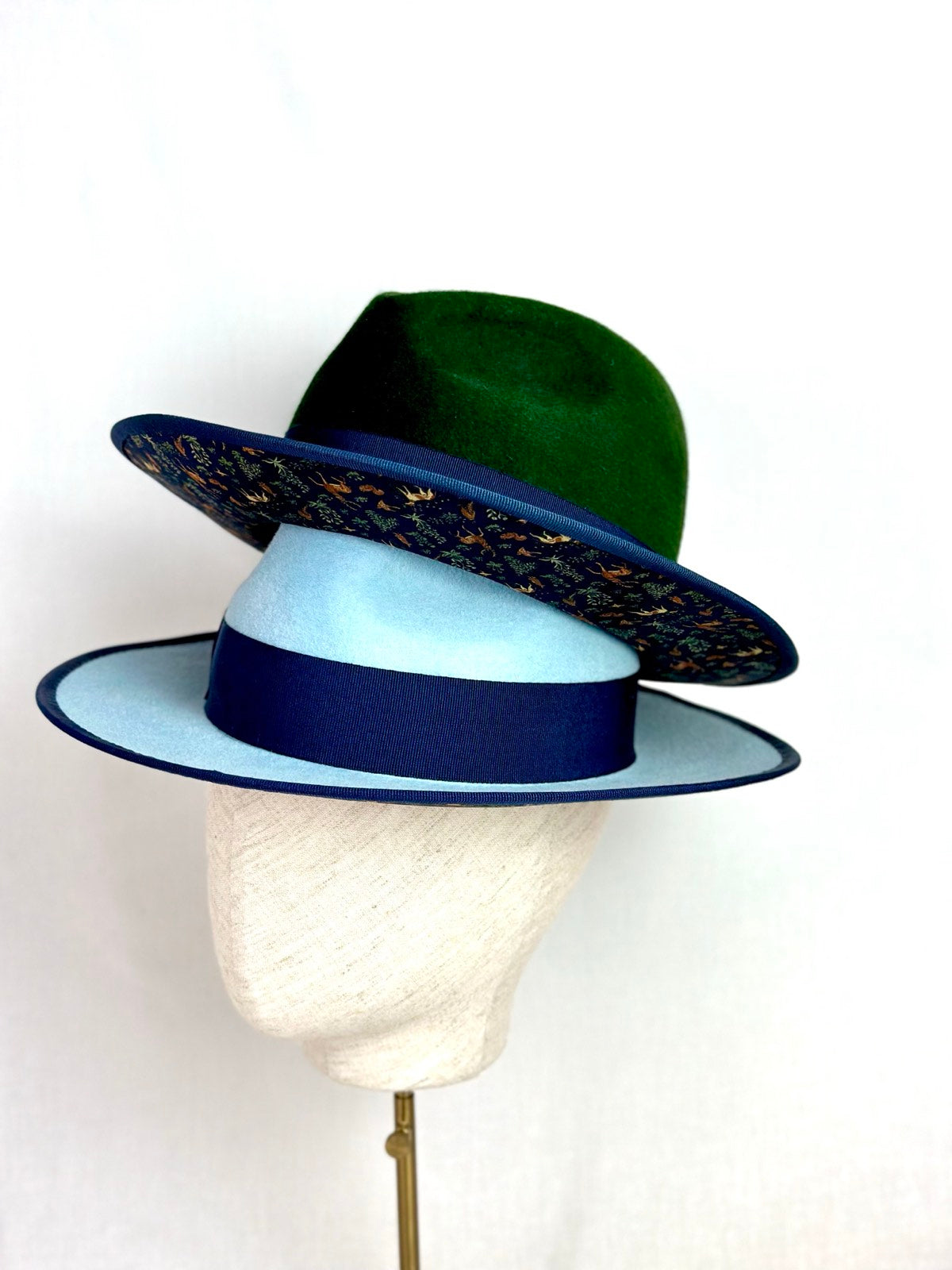
- Strong colour earns its keep on a favourite shape. A scarlet or emerald piece works hard if you already reach for that silhouette.
- Made to order removes the compromise. Every piece here can be commissioned in another colour, so a shape you love arrives in the tone your wardrobe needs.
- Buy for the enclosure, then for the year. Occasion-led collections such as Royal Ascot 2027 solve the hardest date in the calendar, and those pieces should still work in October.
Which dress codes still require a hat?
Enough of them to keep the trade honest. Royal Ascot publishes a written dress code and reviews it each year, so check the current edition before you order anything. As it stands, women in the Royal Enclosure must wear a hat or a headpiece with a solid base of at least 10cm in diameter. That single line does more work than any style advice. It rules out a wisp of feathers on a wire, and it explains why a blocked pillbox, a disc or a structured bow is the reliable answer for that enclosure.
Men have the stricter code. In the Royal Enclosure the requirement is black or grey morning dress with a waistcoat and tie, worn with a black or grey top hat. A straw fedora is a summer hat and it is not permitted in the Royal Enclosure, so if that is your badge, settle the top hat before anything else. In the Queen Anne Enclosure and the Village Enclosure the men's code is a full length suit with a collared shirt and tie, so headwear there becomes a decision about the outfit rather than a rule to satisfy. Our men's hat guide sets out what works in each case and how a brim should relate to the shoulders, and the men's hats collection shows the current shapes.
Beyond the racecourse, the codes that survived are tied to ceremony: church weddings, services of remembrance and any invitation specifying morning dress. Some services expect the head to be covered, so read the invitation before you decide. All of them read better with a hat.
What is the difference between a hat as costume and a hat as clothing?
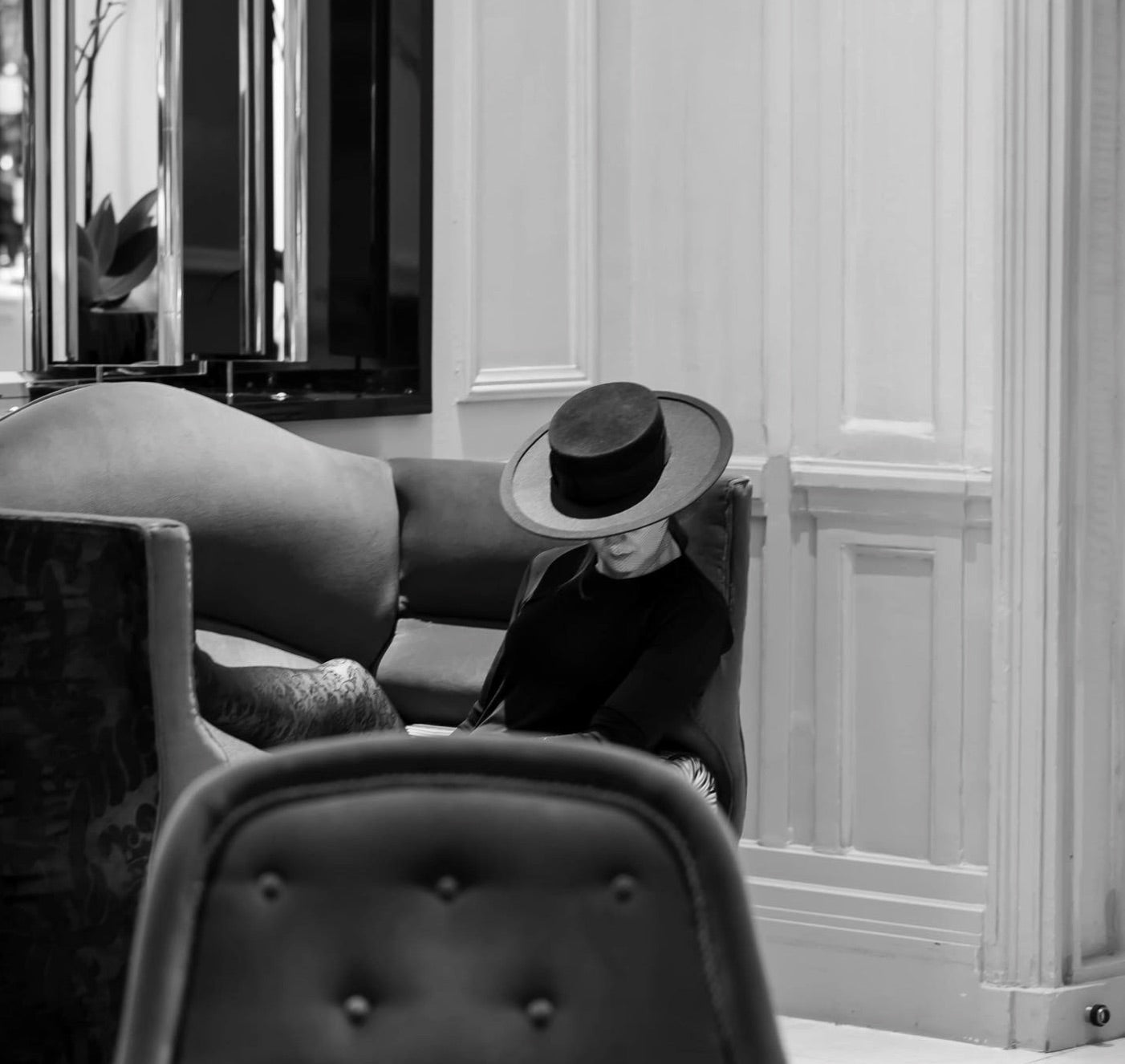
This is the distinction that decides whether a piece is worn once or worn for a decade, and it has almost nothing to do with size. A headpiece reads as costume when it has been scaled for the photograph rather than the wearer, when its colour has been matched exactly to the dress, when it is the only structured thing in the outfit and when it has been pushed to the back of the head to avoid hiding the face.
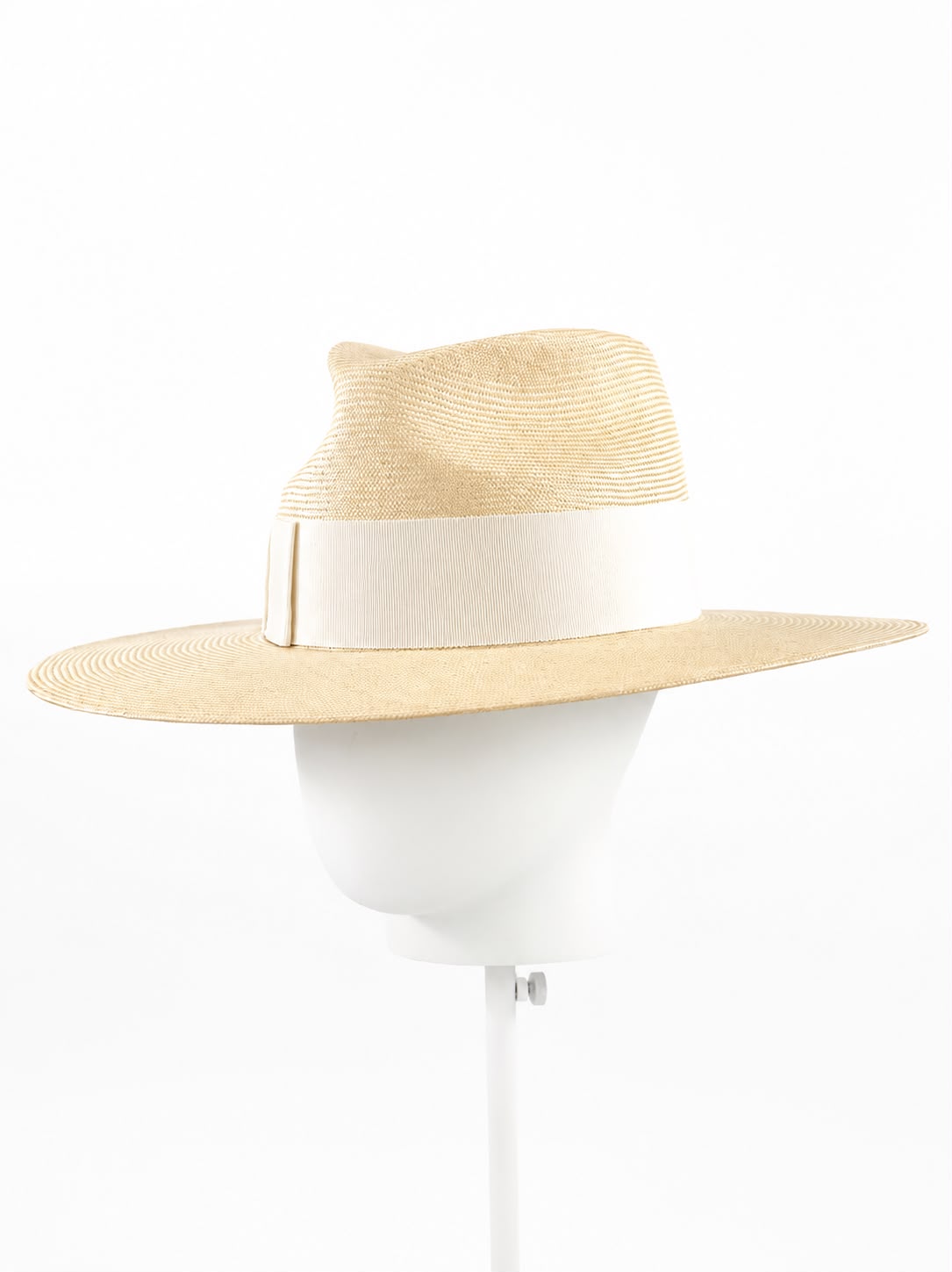
It reads as clothing when four things line up. The proportion answers your face and shoulders, so a wide brim goes with a strong frame and a compact crown suits a fine one. The material carries the same weight as the rest of the outfit, which is why felt belongs with wool; fine straw with linen or silk; velvet with winter cloth. The colour relates to the outfit without copying it, picking up a shoe, a bag or a lining. And the piece sits where it was blocked to sit, usually forward, with the front edge in a settled relationship to the brow. A classic parasisal pillbox makes the point plainly; worn forward it is clothing, worn on the back of the head it becomes a prop.
Why does a hand-blocked hat look different from a mass-produced one?
Because the shape lives in the material instead of sitting on top of it. A blocked piece begins as a straw or felt hood, softened with steam and worked by hand over a wooden block, then left to dry over days so the fibres set in that position. Stiffener goes on by brush, in the quantity that particular material can take. The brim edge is wired and the wire covered by hand, and the grosgrain head fitting is stitched in to the wearer's measurement.
Industrial production presses a hood in a heated mould in minutes, with a heavy dose of stiffener doing the work that time and steam do in an atelier. The results differ in ways visible across a room:
- The crown line. A blocked crown holds a crisp edge where the sides meet the top. A pressed one softens and rounds, and strong daylight shows it immediately.
- Behaviour in weather. A piece shaped slowly returns to its shape after damp. One held together by stiffener relaxes and stays relaxed.
- Fit. Heads are more often oval than round. A hand-stitched head fitting follows your measurement, so a well-made hat stays put in wind without gripping.
- Edges and finishing. Hand-stitched grosgrain, covered wire and invisible joins age well. Machine binding announces itself after one season.
Every piece in this house is blocked and finished by hand by Monika Perlińska, who qualified at a school of millinery in Poland and refined her craft in an atelier with a century of tradition behind it. Twenty years in London followed: five in Philip Treacy's atelier, followed by seven as head milliner at Jane Taylor. Around thirty-five years of practice sits behind each shape, and nothing is made twice. There is more about the designer if you want the longer account.
How do I start wearing a hat without feeling in fancy dress?
Start below the hat. Measure your head with a soft tape around the widest part, just above the ears and around the back; most pieces here sit in the 56 to 60cm range and a fitting settles the rest. Then work up in scale:
- Begin with a band. A silk bow headband at GBP 75 is the lowest-risk way to find out how you feel with something on your head.
- Use hair matching. Pieces such as the Sculpted Felt Bow are built on a band colour-matched to the wearer's hair with a hidden comb, so the structure appears to float and the mechanics disappear.
- Wear it at home first. Twenty minutes in the kitchen removes the self-consciousness that arrives at the church door.
- Dress from the head down. Put the piece on first and build the outfit underneath it. Adding a hat last is what produces the costume effect.
- Settle the hair with the hat. A piece sits differently over a low chignon than over loose hair, so decide both together.
- Allow one strong element. If the hat is the event, keep the jewellery quiet.
Bring a fabric swatch or a clear photograph of the outfit to a fitting, in the London atelier or by video call from abroad. Delivery within the United Kingdom is £20.00, and takes 48 hours of despatch. Europe is £45.00, the United States is £85.00 and the rest of the world is £85.00. Duties outside the UK are set by your own customs authority and collected by the courier on arrival.
If there is a date in your diary, the useful next step is a conversation about proportion and colour before anything is blocked. Look through the hats and headpieces to find a shape you keep returning to, then start a commission whenever you are ready, in whatever colour your wardrobe has been waiting for.