

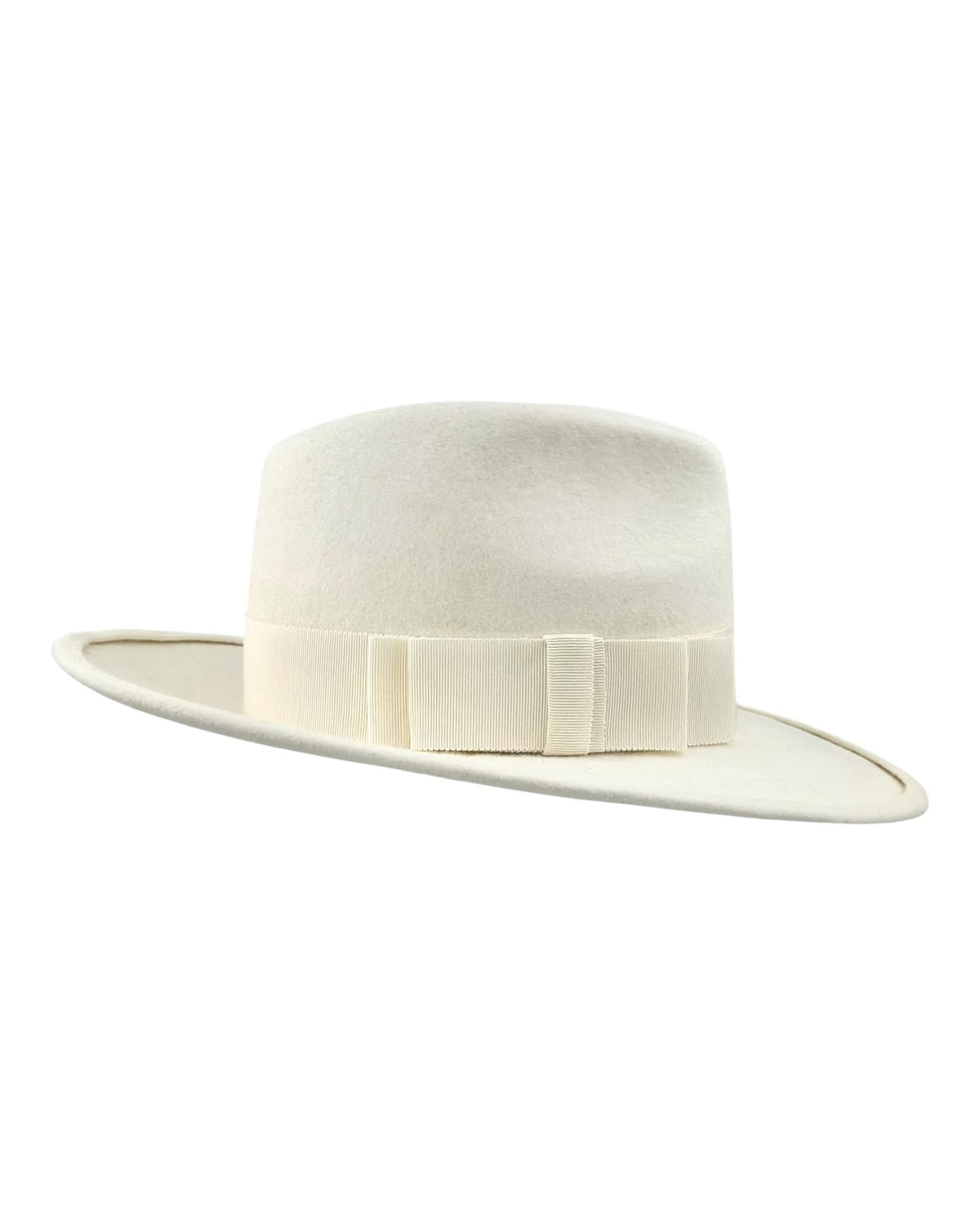
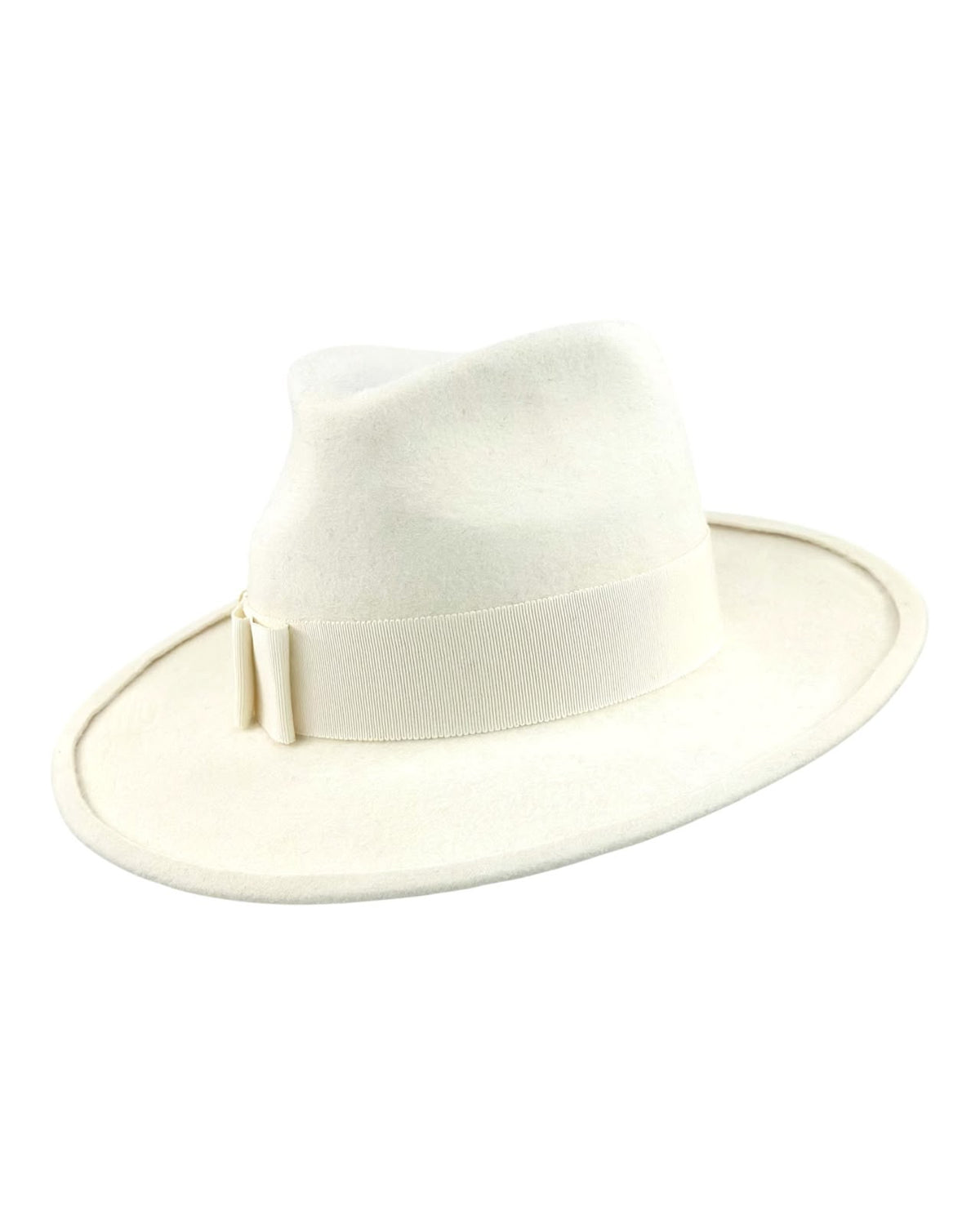
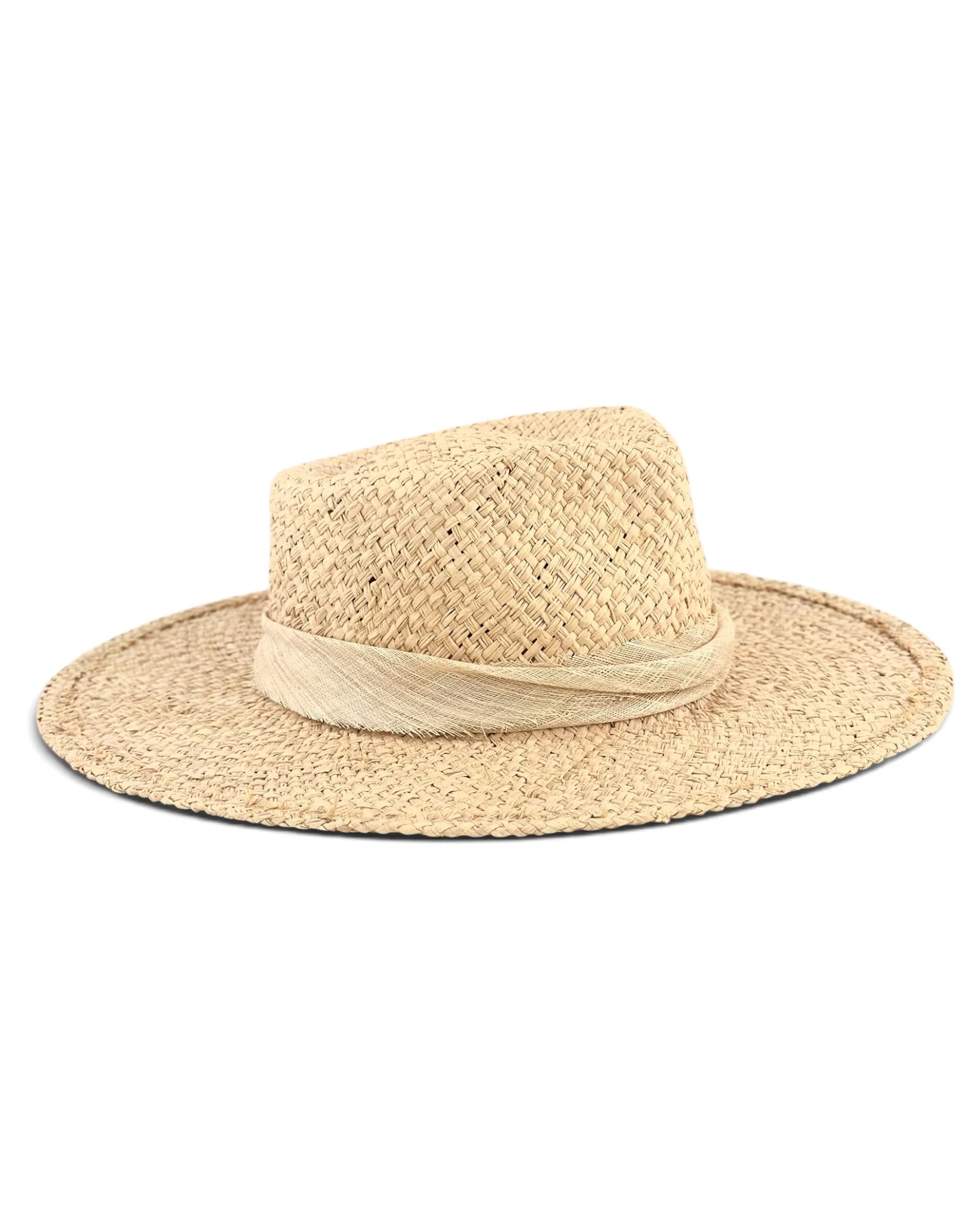
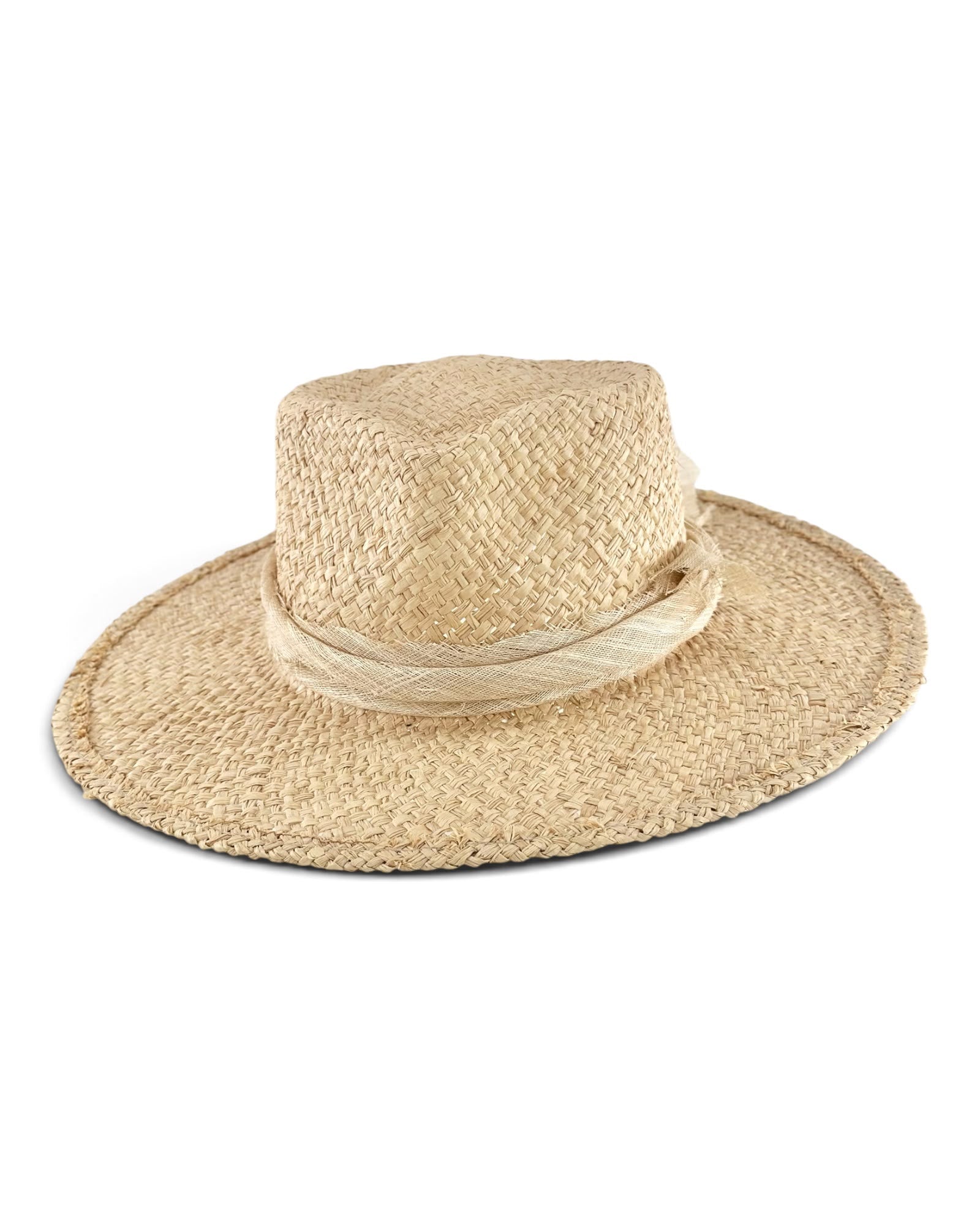
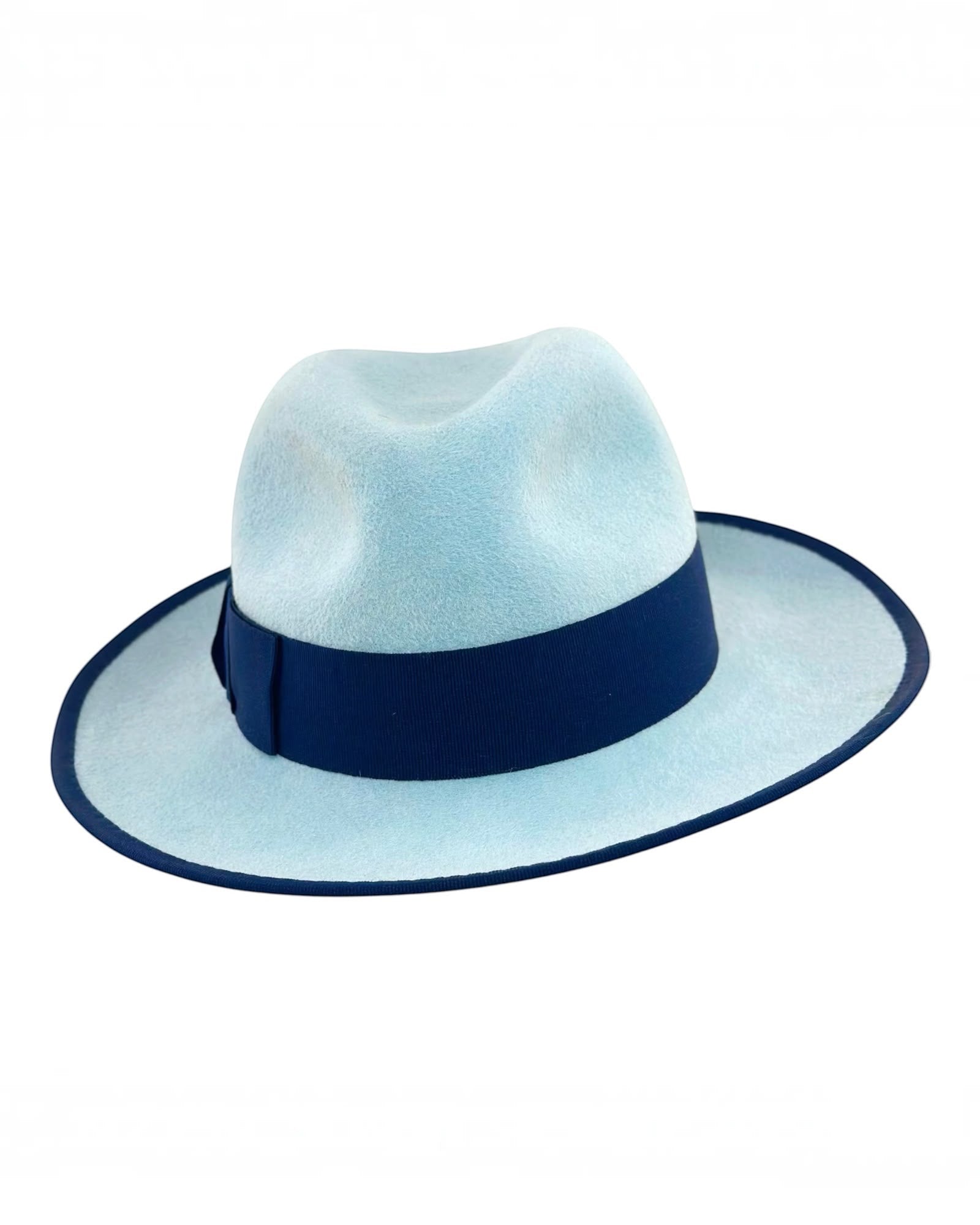
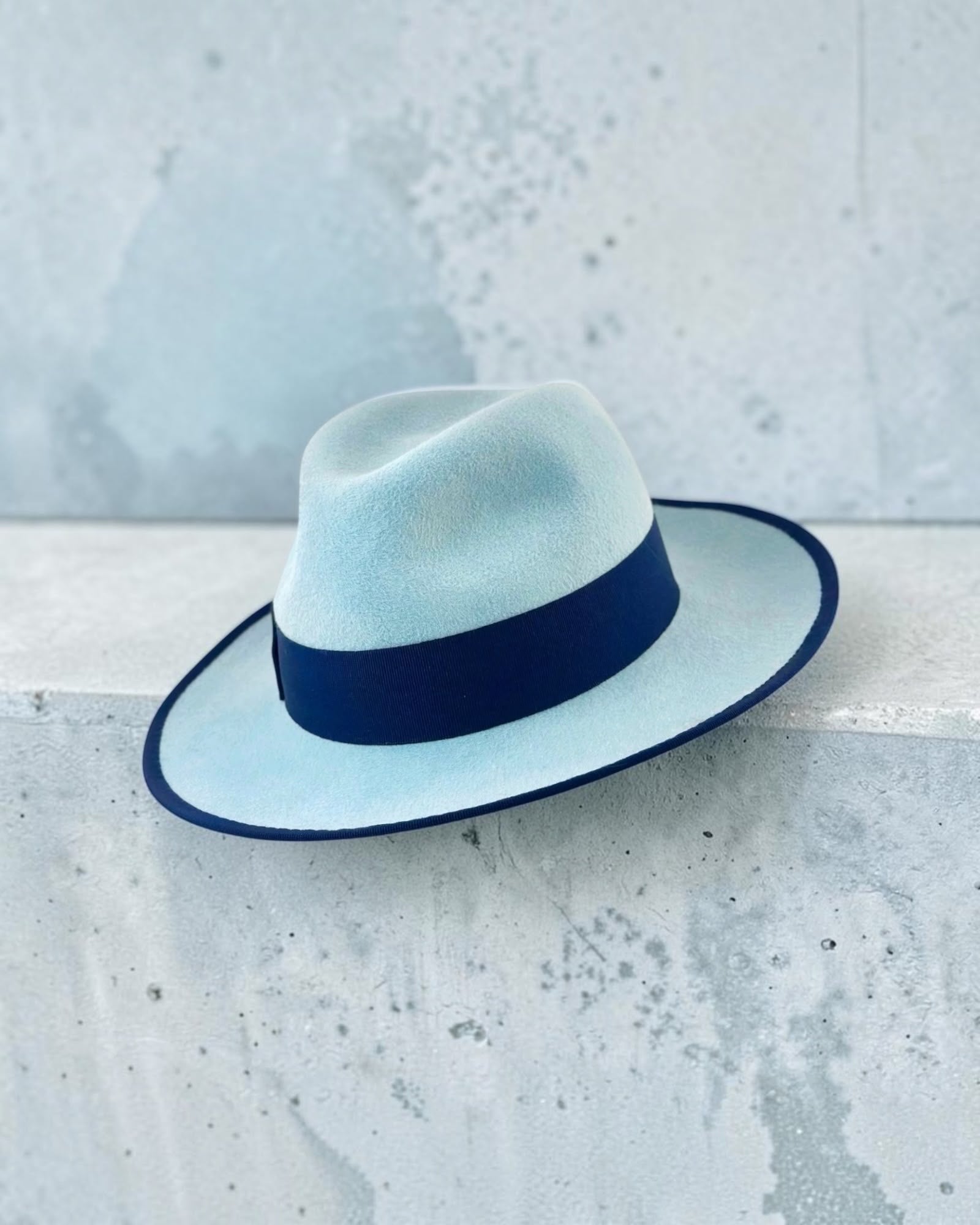
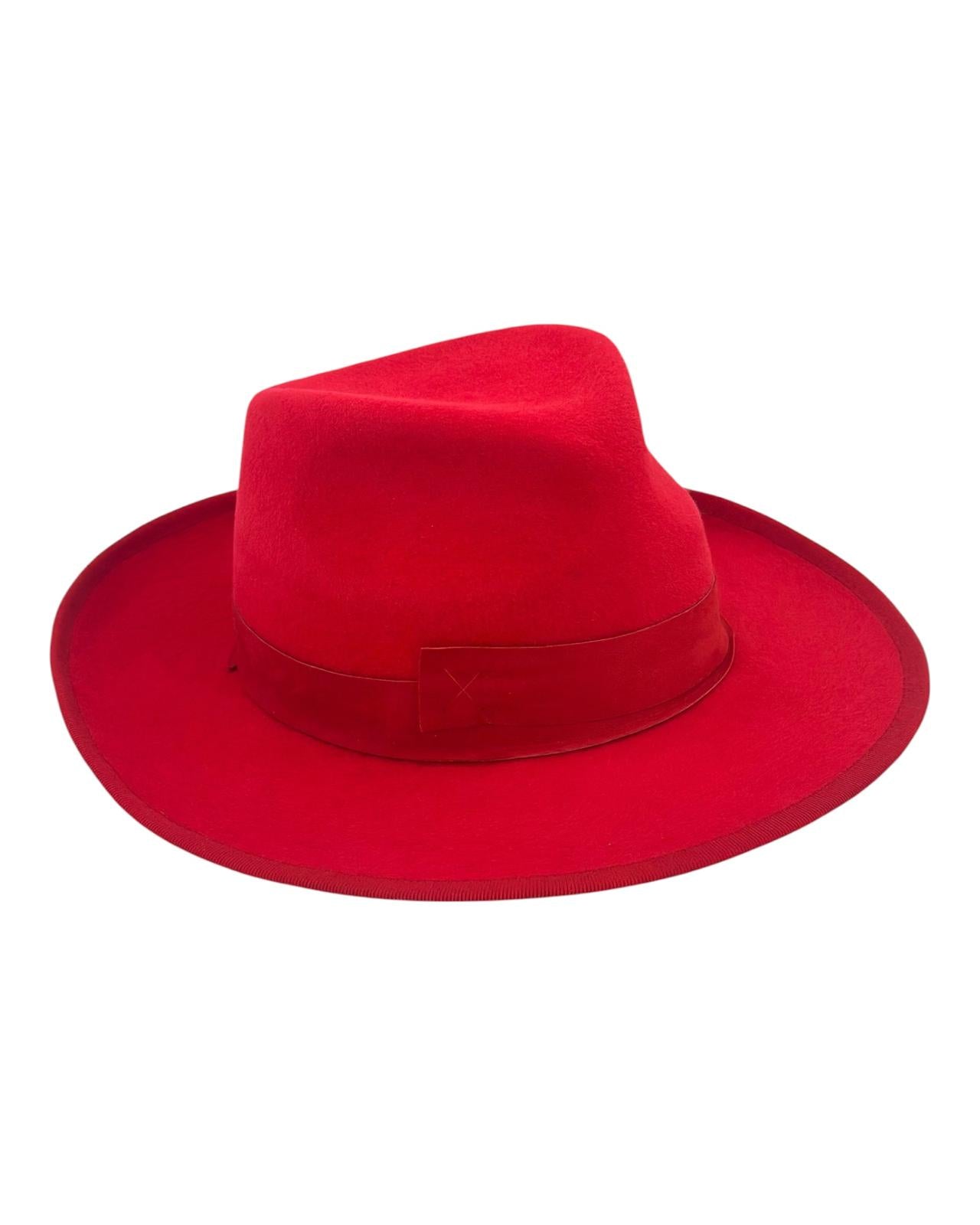
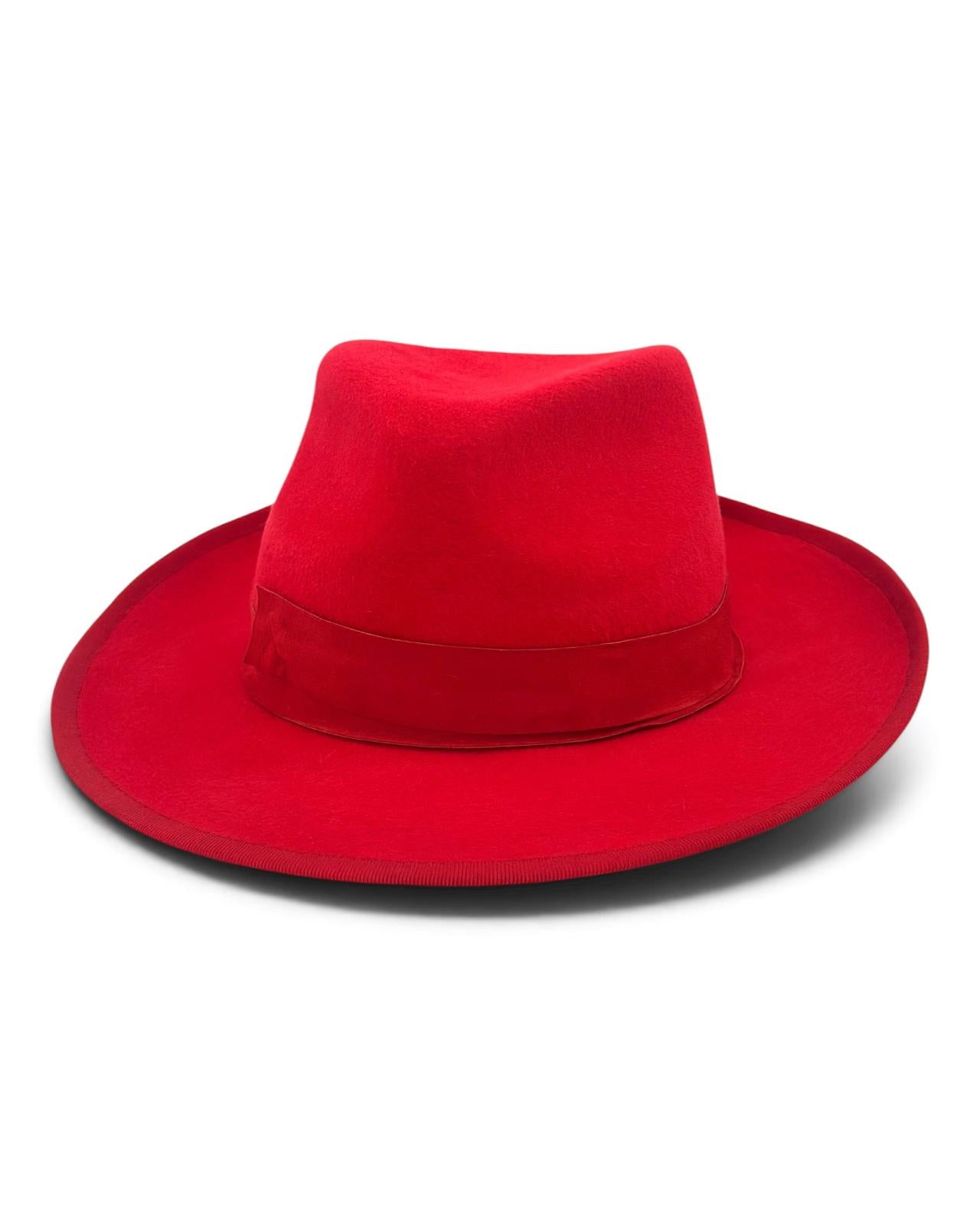
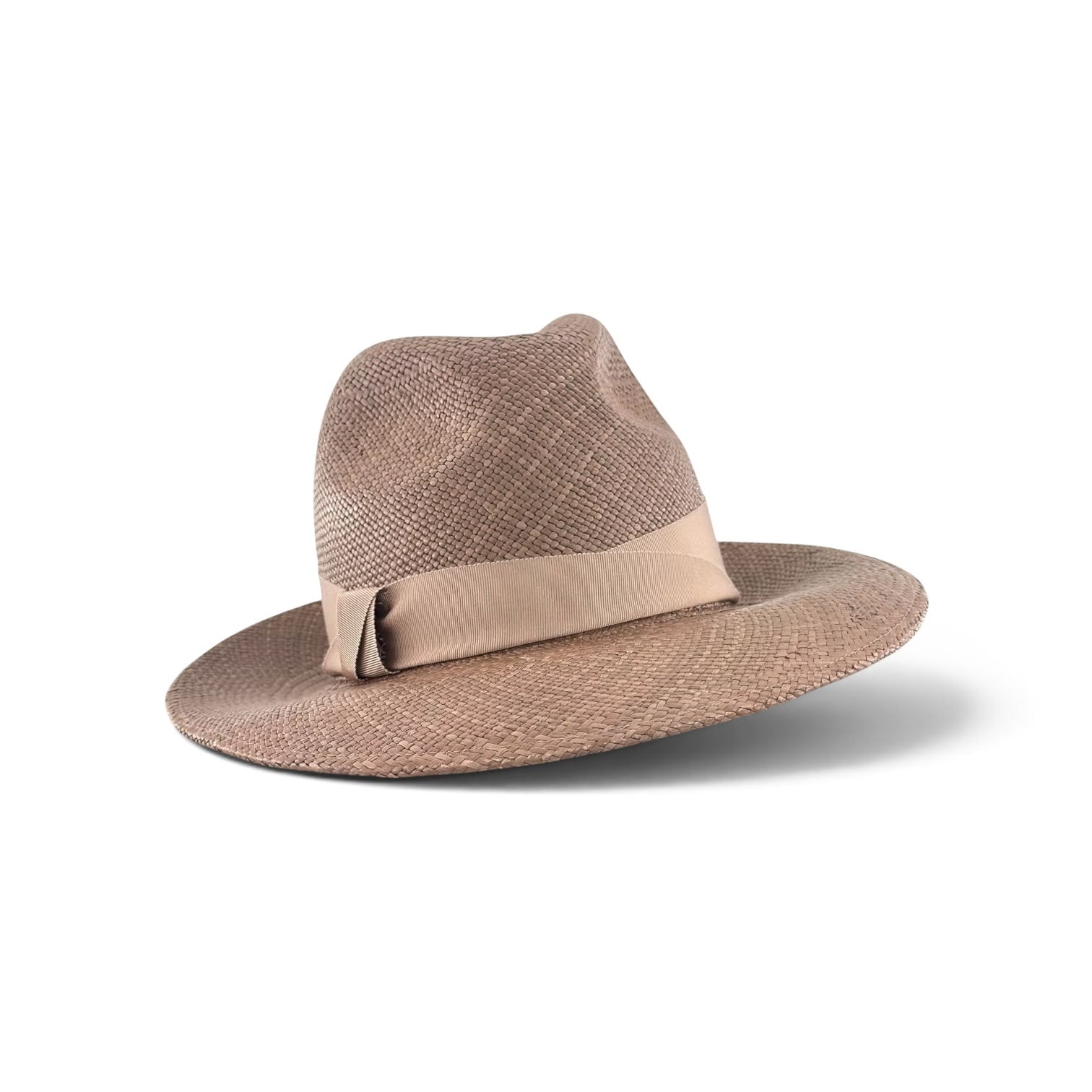
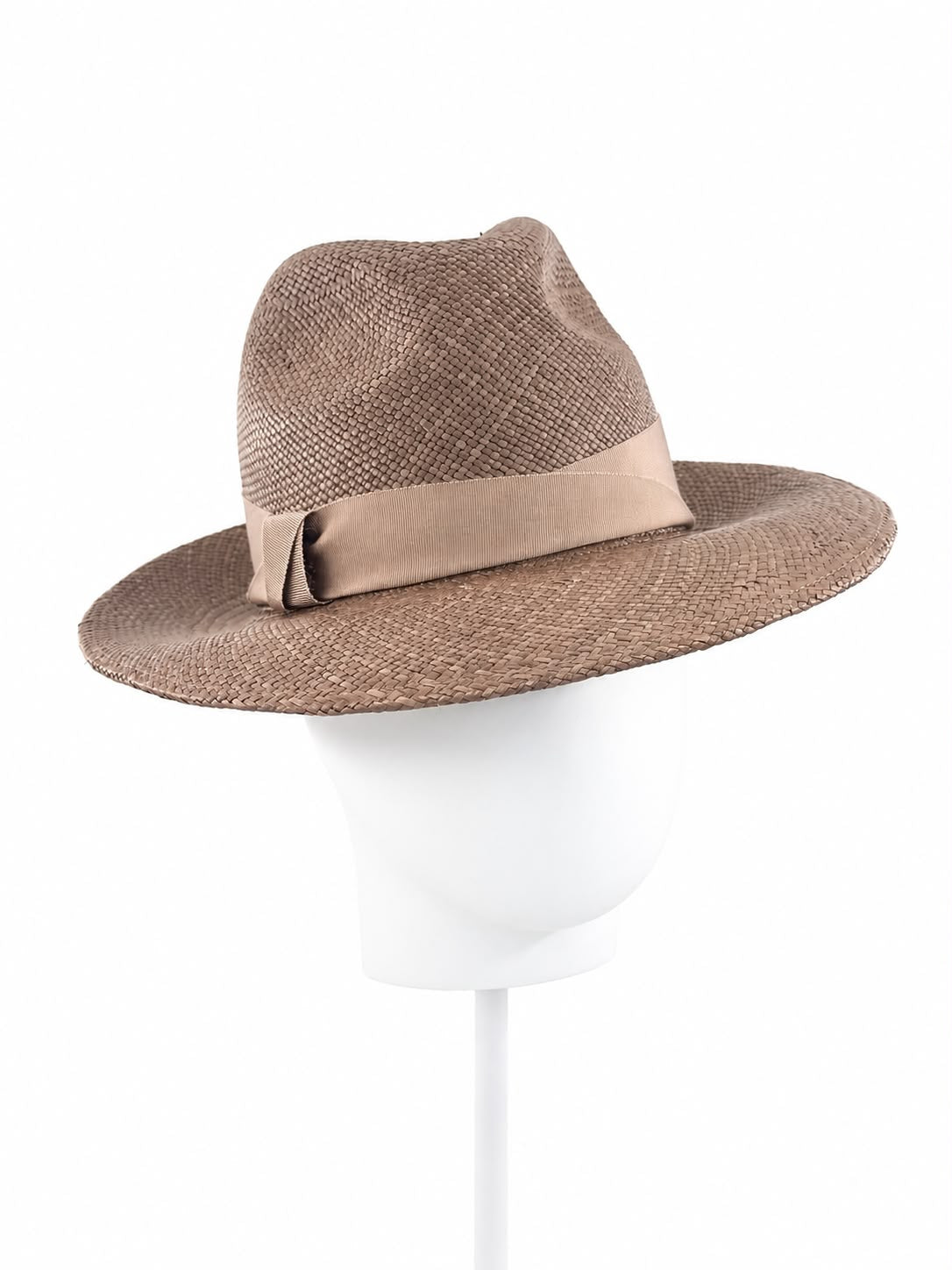
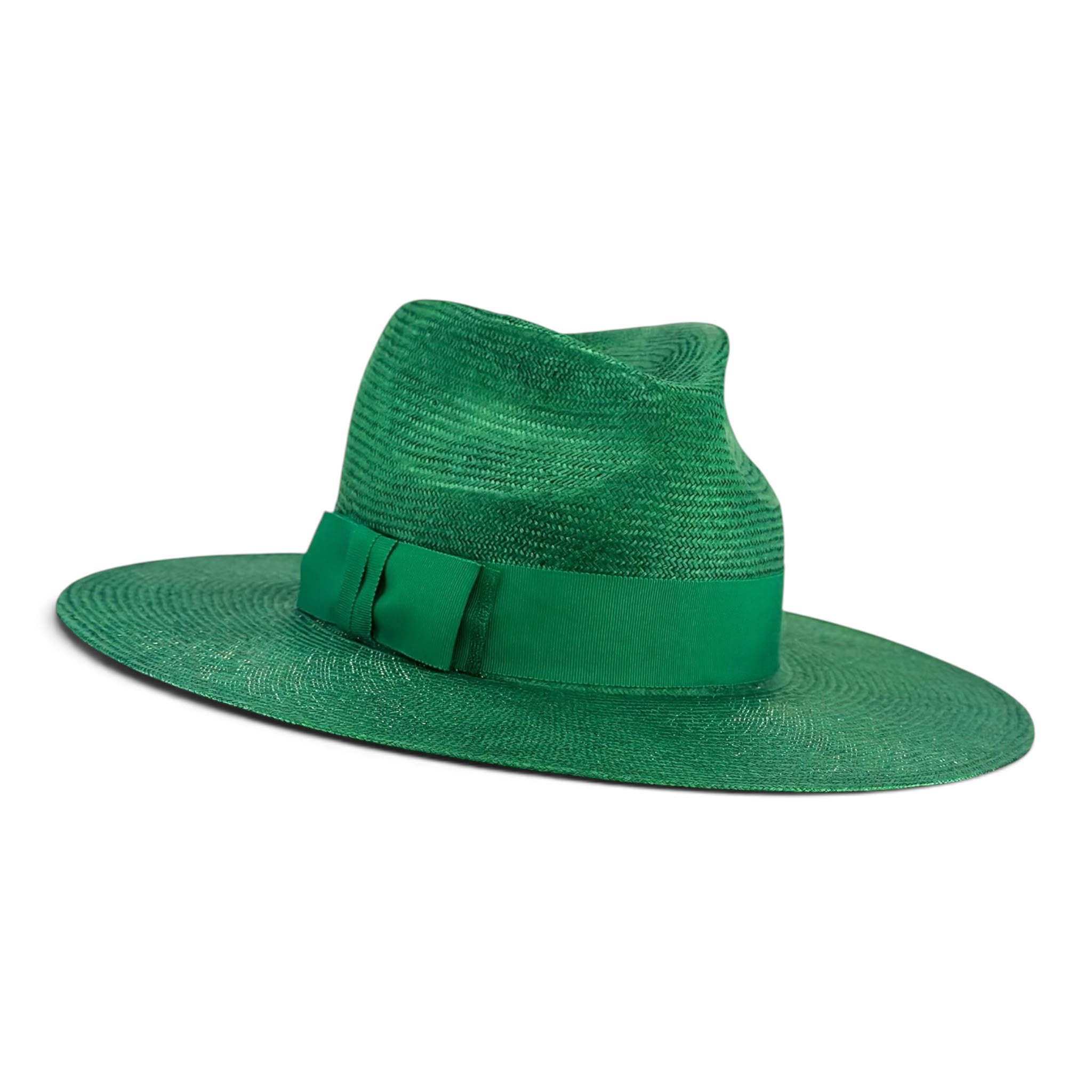
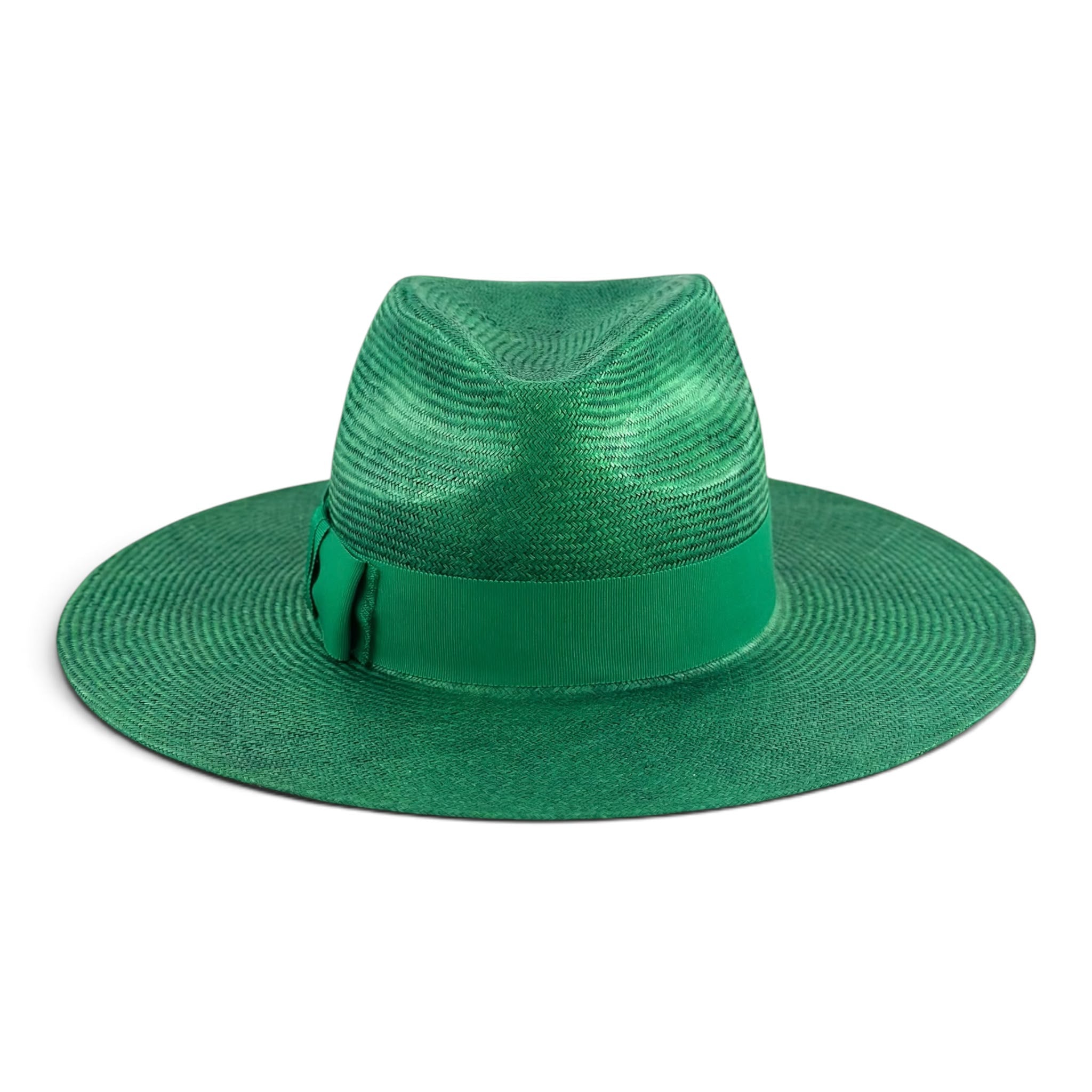
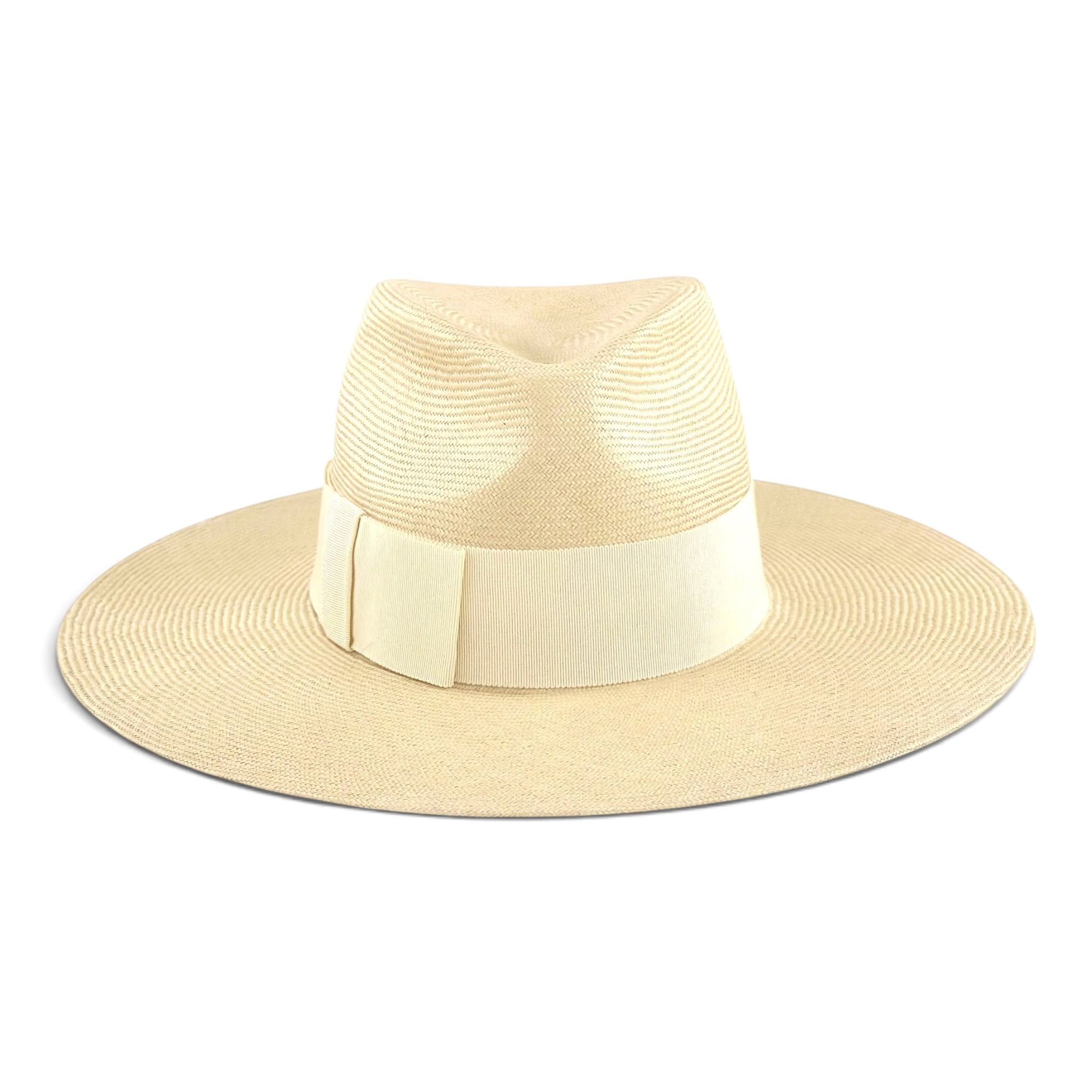
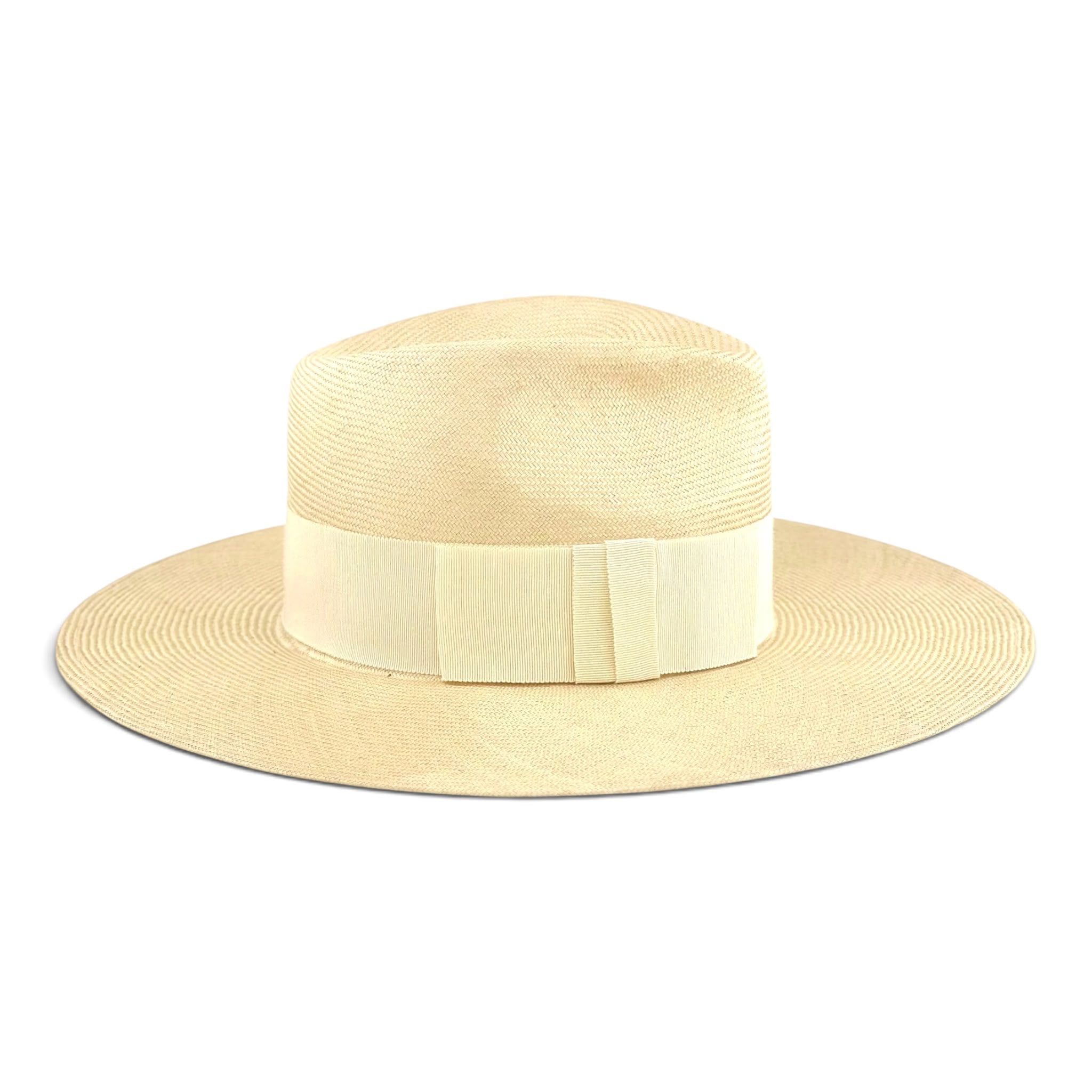
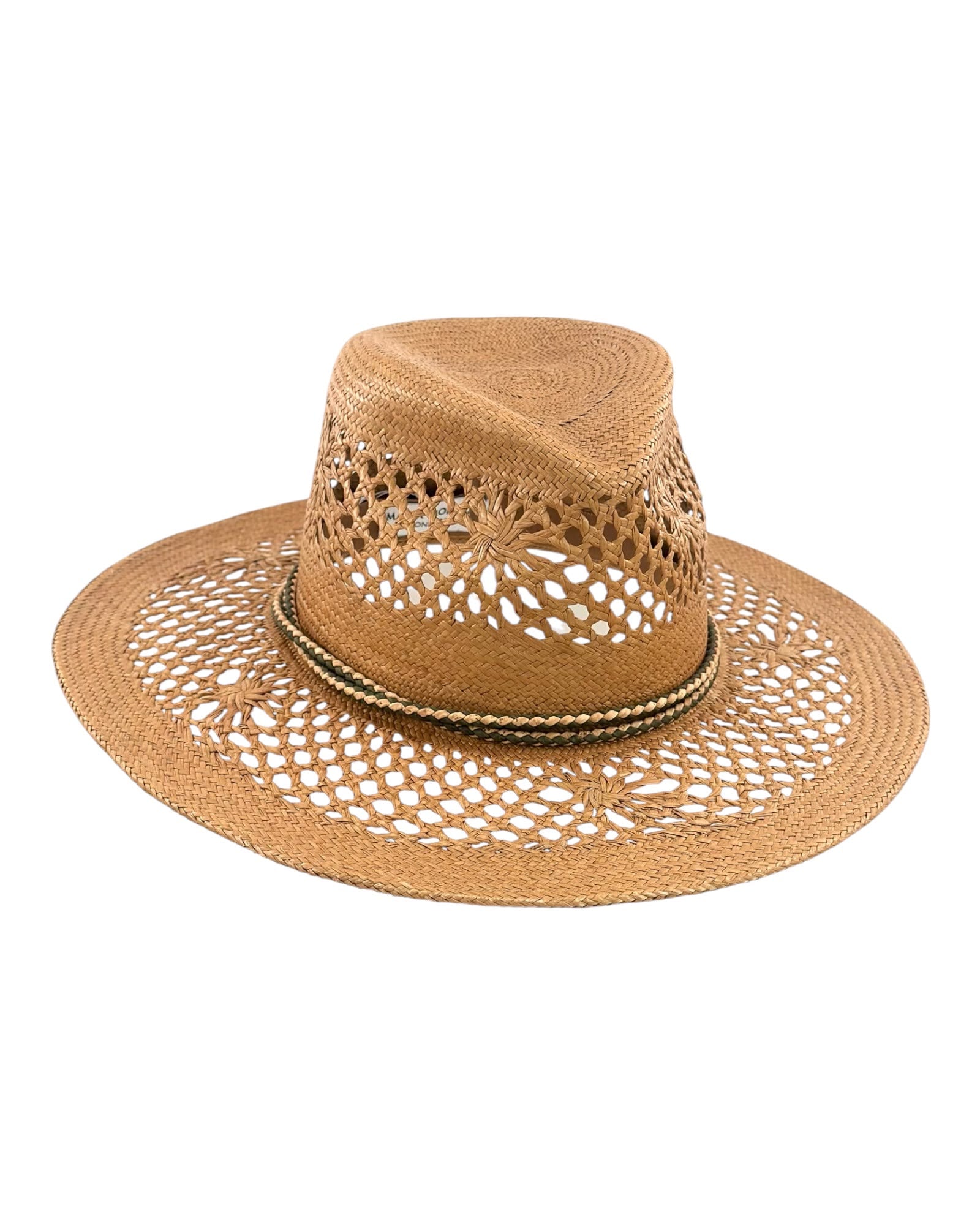
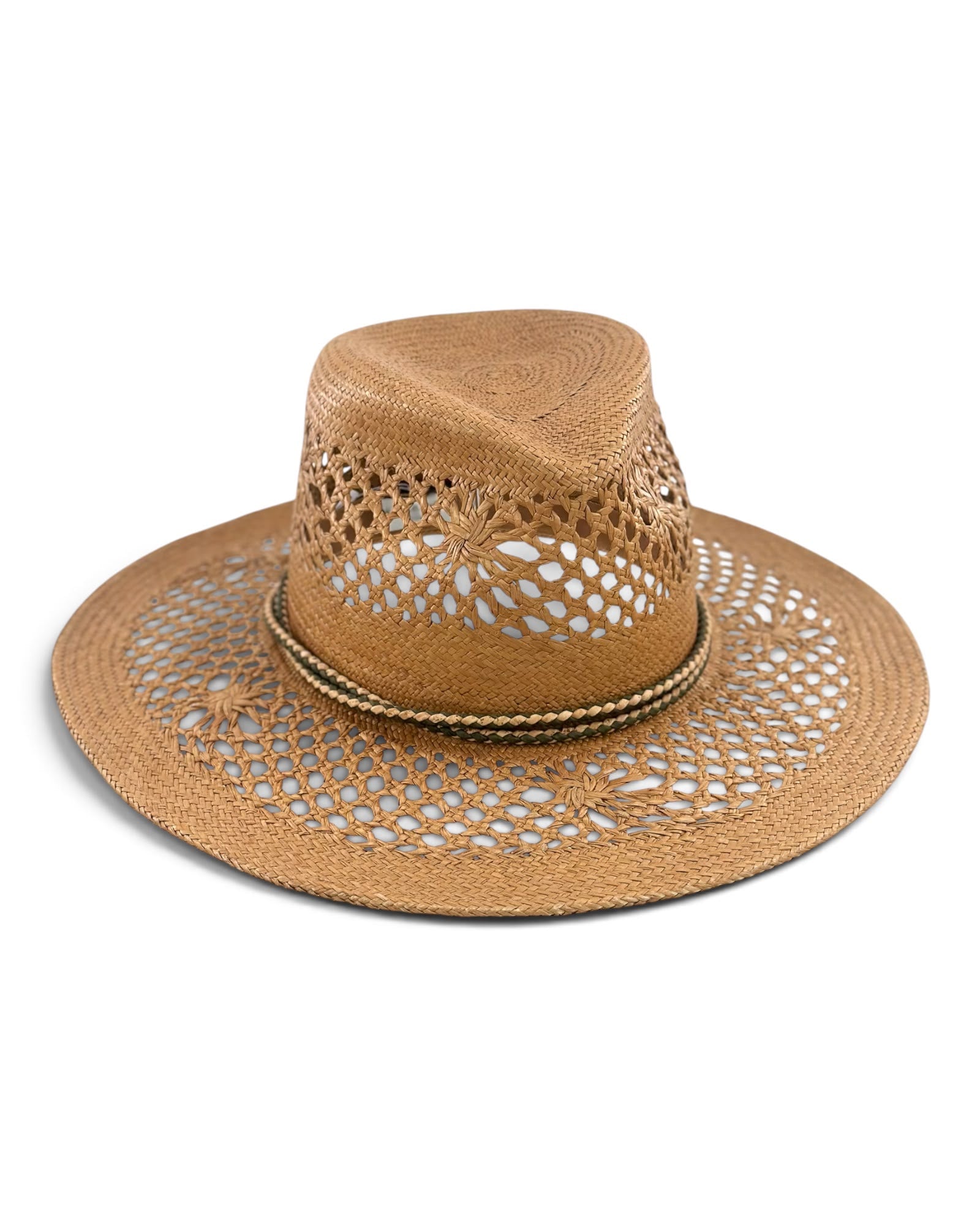
The crease and the brim do all the work. A fedora carries the wider brim, most often turned down at the front, and a trilby keeps its brim short and snapped up at the back. The same pinched crown, two quite different faces.
Straw runs from late spring through September and felt takes the rest of the year. Every hat here is blocked by hand in the London atelier, and the parasisal fedoras and the Panama trilby are cut to be worn by women and men.
Choosing yours
Three things that decide a fedora or a trilby
Fedora or trilby
The fedora gives you a wider brim you can turn down at the front, which shades the face and softens the jaw. The trilby keeps a short brim lifted at the back, sits closer to the head and reads sharper.
Straw for summer, felt for winter
Parasisal and Panama straw are light, breathable and hold a crisp brim through a hot day. Felt gives warmth and a softer crease and copes with damp far better, though neither should ever be dried on a radiator.
How to care for itIt should sit level
A fedora is worn straight, about a finger's width above the ears. Measure around the head one centimetre above the ears and across the middle of the forehead, and take the larger figure if you fall between two sizes.
Size and fitAcross the atelier
Other shapes and occasions
Pillbox hats
Flat crown, no brim, worn back on the head. The occasion shape that carries a strong outfit without competing with it.
Pillbox hatsWide-brimmed hats
Brims from 10cm for a lawn, a terrace or a racecourse, in parasisal, Panama and felt.
Wide-brimmed hatsBerets
Blocked felt that holds its own volume, and the one shape that sits behind a fringe and leaves it alone.
BeretsEveryday hats
Everything cut for the days between the occasions, made to be worn with a coat and denim.
Everyday hatsMade for you
Monika will block a fedora or a trilby to your own measurement, in straw or felt, and match the ribbon by hand to your fabric. One to four weeks from the first conversation.
A pinched crown and a brim that holds its line. Fedoras and trilbies are the shapes for the days between the occasions, and they wear with a coat and denim as easily as with tailoring. Straw for summer, felt for the colder months, each one hand-blocked in the London atelier and sized to your own head.
Fedora or trilby: how to tell them apart
Start with the brim, because that is where the difference lives. A fedora carries a wider brim, usually six centimetres or more, wide enough to turn down at the front and shade the face. A trilby keeps a narrow brim of roughly three to five centimetres, snapped up sharply at the back and angled down at the front.
The crown is the part they share. Both are creased lengthwise along the top with a pinch at each side of the front, which is what gives either hat its shape from across a room. A trilby crown usually tapers a little more and sits closer to the head, so the whole hat reads neater and more urban. A fedora sits wider and softer and gives you shade you can actually use.
Felt, straw and when each works
Felt is the winter material. It holds a sharp crease, copes with damp far better than straw, moulds to the head over time and gives weight to a coat. Fur felt is finer and lighter than wool felt and keeps its edge for decades with reasonable care.
Straw is the summer material. Parasisal is woven from sisal fibre and takes a crisp blocked brim that holds its line through a hot day. Panama is woven in Ecuador from toquilla palm and is softer, lighter and cooler, which is why it travels well. Straw dislikes rain, so keep a straw hat for dry days and reach for felt when the sky looks uncertain.
Both materials are covered in the guide to caring for a felt or straw hat, and the shapes are compared side by side in the guide to hat shapes.
Made to order and sized to your head
Every shape here can be blocked again to your own measurement, in the material and colour you want, with the ribbon matched by hand. Brim width and crown height are set to suit your face rather than a standard size chart. Allow one to four weeks from the first conversation, and begin a commission when you know what you want.
Measure with a soft tape around the head roughly one centimetre above the ears and across the middle of the forehead, snug rather than tight, over the hair you plan to wear. That figure in centimetres is your size. If you fall between two, take the larger.
Questions
What is the difference between a trilby and a fedora?
A fedora has a wider brim, usually six centimetres or more, that can be turned down at the front. A trilby has a narrow brim of about three to five centimetres, snapped up at the back. Both share a pinched crown with a lengthwise crease. The fedora shades the face. The trilby sits closer to the head and reads sharper.
Which suits a smaller face?
A trilby. A narrow brim keeps the proportion tight and stops the hat swallowing the face, and the shorter crown adds height without adding width. If you want a fedora on a smaller frame, ask for a brim at the lower end of the range and a slightly shallower crown, both of which are set by hand on a commission.
Are these hats unisex?
Yes. Every fedora and trilby here is made to a head measurement, so the block, the brim line and the ribbon are the same whoever orders it and only the centimetres change. Women wear these shapes as everyday hats and for travel, and colour, ribbon and brim width can all be changed on a commission.
What is a panama and is it a shape or a material?
Panama is a material. It is a straw hand-woven in Ecuador from the toquilla palm, and it can be blocked into a fedora, a trilby, a wide brim or almost any other shape. So a Panama fedora and a Panama trilby are both panamas. The name comes from the hats being shipped through Panama in the nineteenth century.