How a couture hat is made by hand
A couture hat is made entirely by hand in four stages: blocking, wiring, sewing and trimming. Blocking shapes dampened felt or straw over a carved wooden block, wiring sews a fine wire into the edge so the brim holds its line, sewing joins every layer with hidden stitches, and trimming adds the final decoration. Each stage is worked by one milliner over many hours, which is why a genuine couture hat keeps its shape for decades and sits correctly on a single head.
What couture means in millinery
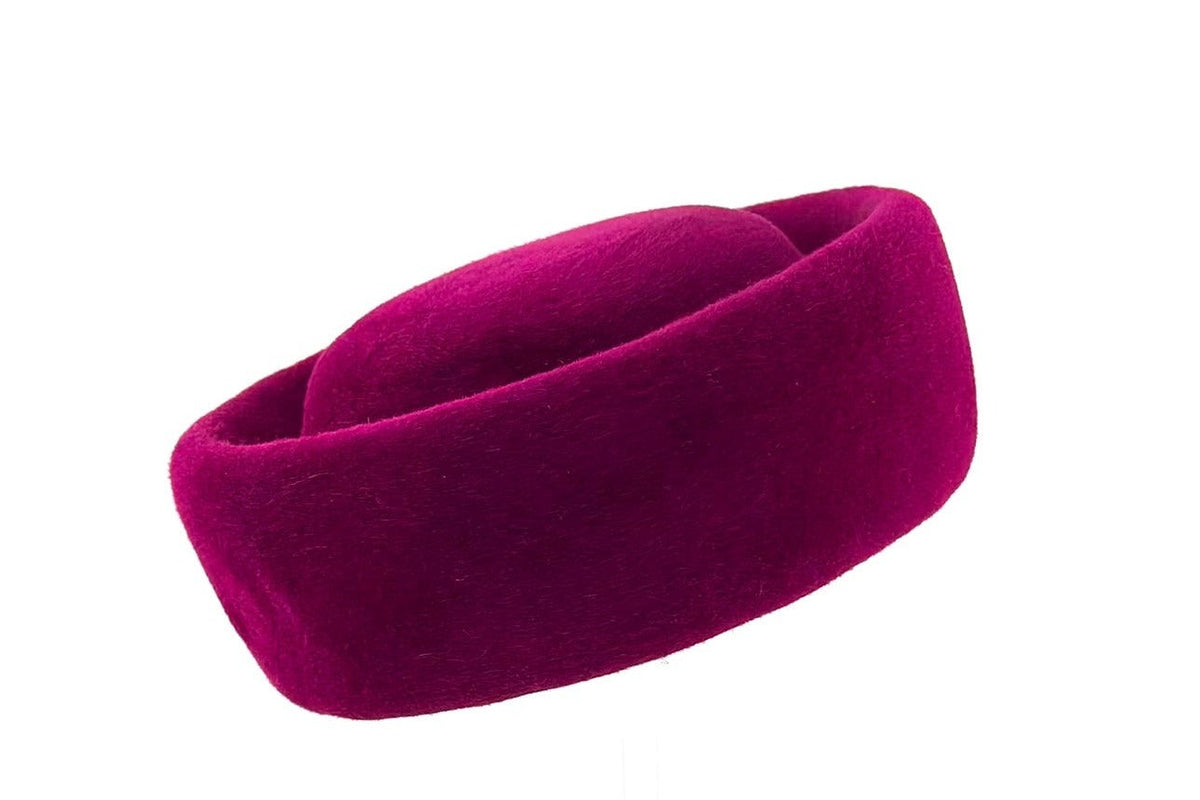
Couture describes a hat made one at a time, by hand, to a standard machine production cannot reach. There is no factory line and no stamped shape. A single maker takes raw felt or straw and forms it, stitches it and finishes it, so the piece carries the balance and precision of the person who made it. At Maria Monica London every hat is hand-blocked in London and made as a one of one, with any colour matched from a photograph or a fabric swatch.
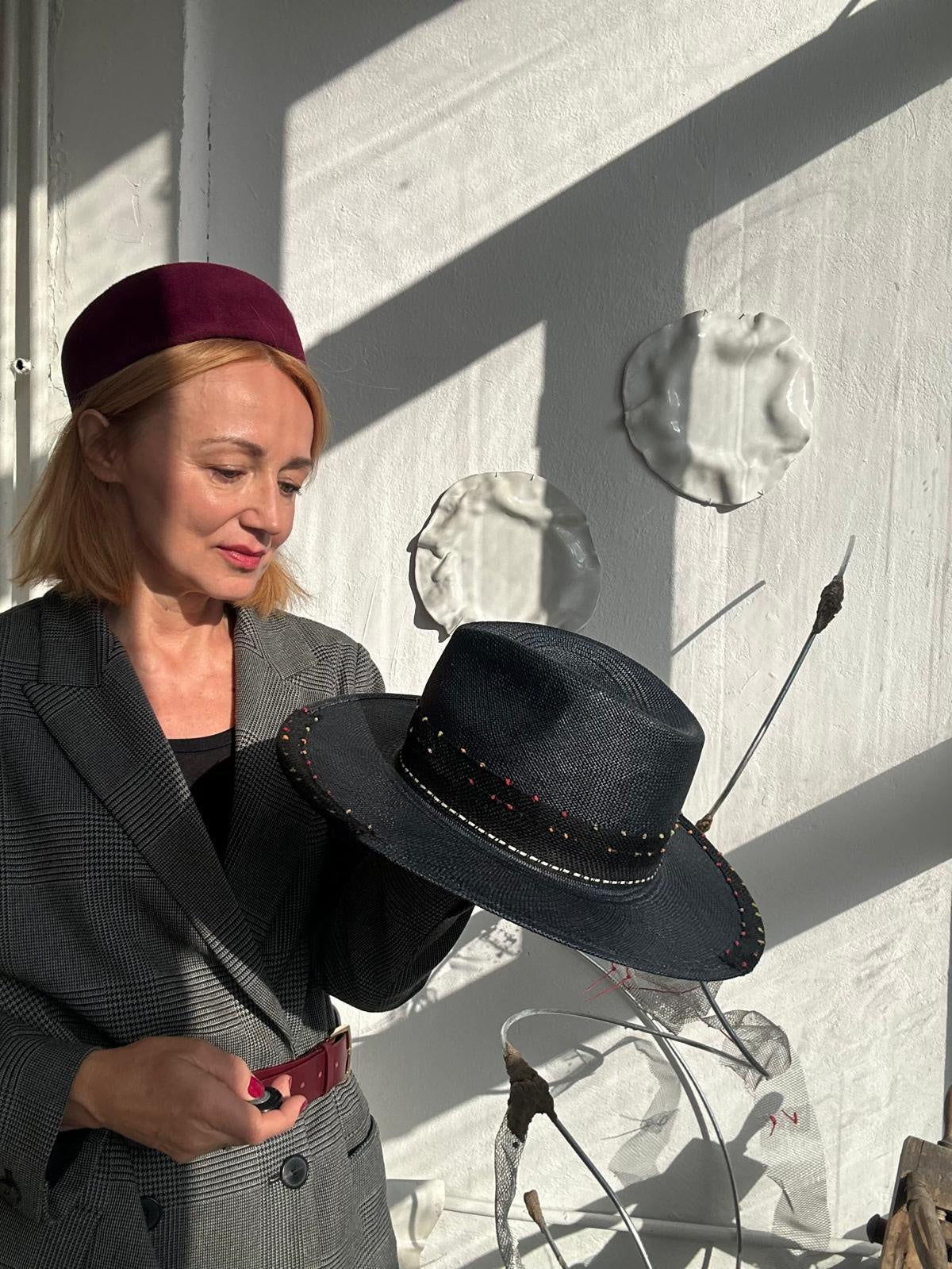
Monika Perlińska has spent thirty-five years at the craft. She spent five years in Philip Treacy's London atelier and seven years as head milliner at Jane Taylor. That lineage sits behind every stage described below.
Stage one: blocking the shape
Blocking is the foundation of the hat. The milliner chooses a material, softens it with steam and stretches it over a wooden block carved to the exact crown or brim shape. The damp material is pulled taut, pinned into place with blocking pins and left to dry until it holds the form on its own. When the pins come out the shape stays.
Choosing the material
Fur felt gives structure and warmth for the cooler months and takes a sculptural shape well. Straws such as parisisal and sisal are woven from natural fibre and suit spring and summer, giving a lighter finish for garden weddings and race days. The choice of material decides how the hat will move, how it catches light and how it wears over years.
Stage two: wiring the edge
Once the shape is dry the milliner wires the edge. A length of millinery wire is laid around the brim and secured with a small looping stitch worked entirely by hand. The wire is joined with a neat overlap so there is no lump, then covered so it disappears inside the edge.
Wiring is what lets a wide brim hold a clean sweeping line instead of collapsing. It also means the brim can be gently reshaped in future, so a hat can be adjusted to sit at a fresh angle for a new occasion.
Stage three: sewing by hand
Hand sewing holds a couture hat together and hides every join. A petersham ribbon is shaped with an iron into a curve and stitched inside the crown as the headband, which is what makes the hat grip comfortably and sit level. Linings, mulling and any joins between crown and brim are all closed with fine stitches placed by eye.
A machine cannot follow the compound curves of a blocked hat with the same accuracy, so the work is done by hand where it counts. The reward is a smooth interior, an invisible finish and a hat that keeps its shape through wear, travel and storage.
Stage four: trimming and finishing
Trimming is the stage most people picture, and it carries the character of the piece. Silk ribbons, feathers, hand-shaped flowers, bows and veiling are arranged, balanced and stitched in place. Trims are frequently hand-dyed so a feather or a length of silk meets a bridal palette or an outfit exactly, which is how a colour taken from a photograph ends up matched on the finished hat.
Frank Sinatra put it simply: "Cock your hat, angles are attitudes."
The angle a trim sets, and the tilt the brim allows, decide how the hat frames the face. That judgement comes from the maker's eye and cannot be automated.
Why hand work matters
Hand work gives three qualities that last:
- Fit. The headband is shaped by hand to sit level and hold securely.
- Longevity. A wired blocked hat keeps its form and can be re-blocked or repaired rather than replaced.
- Individuality. A one of one piece exists nowhere else and is matched to your colour, your head and your occasion.
A bespoke commission takes one to four weeks from first conversation to finished hat, and that time is the hand work itself. You can see how a commission begins on our bespoke service, or view finished pieces ready to wear across the veiled hats collection.
Dressing for Royal Ascot
Race day dress codes reward proper millinery. The Royal Enclosure at Ascot requires a hat or a headpiece with a solid base of at least 10cm in diameter. Fascinators are welcome elsewhere on the course yet they are not permitted in the Royal Enclosure, so a blocked hat or a structured headpiece is the safe choice for that lawn. Our Royal Ascot 2027 collection is built with those rules in mind.
Questions people ask
How long does it take to make a couture hat by hand?
A bespoke hat takes one to four weeks from the first consultation to completion, because each stage of blocking, wiring, sewing and trimming is worked by hand.
What is the difference between blocking and trimming?
Blocking forms the raw felt or straw into the hat shape over a wooden block. Trimming is the final decoration, when ribbons, flowers, feathers and veiling are added.
Can you match a hat to a specific colour?
Yes. Every piece is made as a one of one and any colour can be matched from a photograph or a fabric swatch, with trims hand-dyed where needed.
Are fascinators allowed in the Royal Enclosure at Ascot?
No. The Royal Enclosure requires a hat or headpiece with a solid base of at least 10cm across. Fascinators are allowed in other areas of the course.
Why choose a handmade hat over a factory one?
A handmade hat is fitted to your head, holds its shape for years and can be reshaped or repaired. It is made for one wearer and one occasion.
To begin a hat matched to your colour, your outfit and your occasion, enquire about a private commission. UK delivery is £20.00, and worldwide shipping is fully insured.
Shop the pieces
Every piece is designed and made by hand in the London atelier.