How to care for a felt or straw hat so it lasts for decades
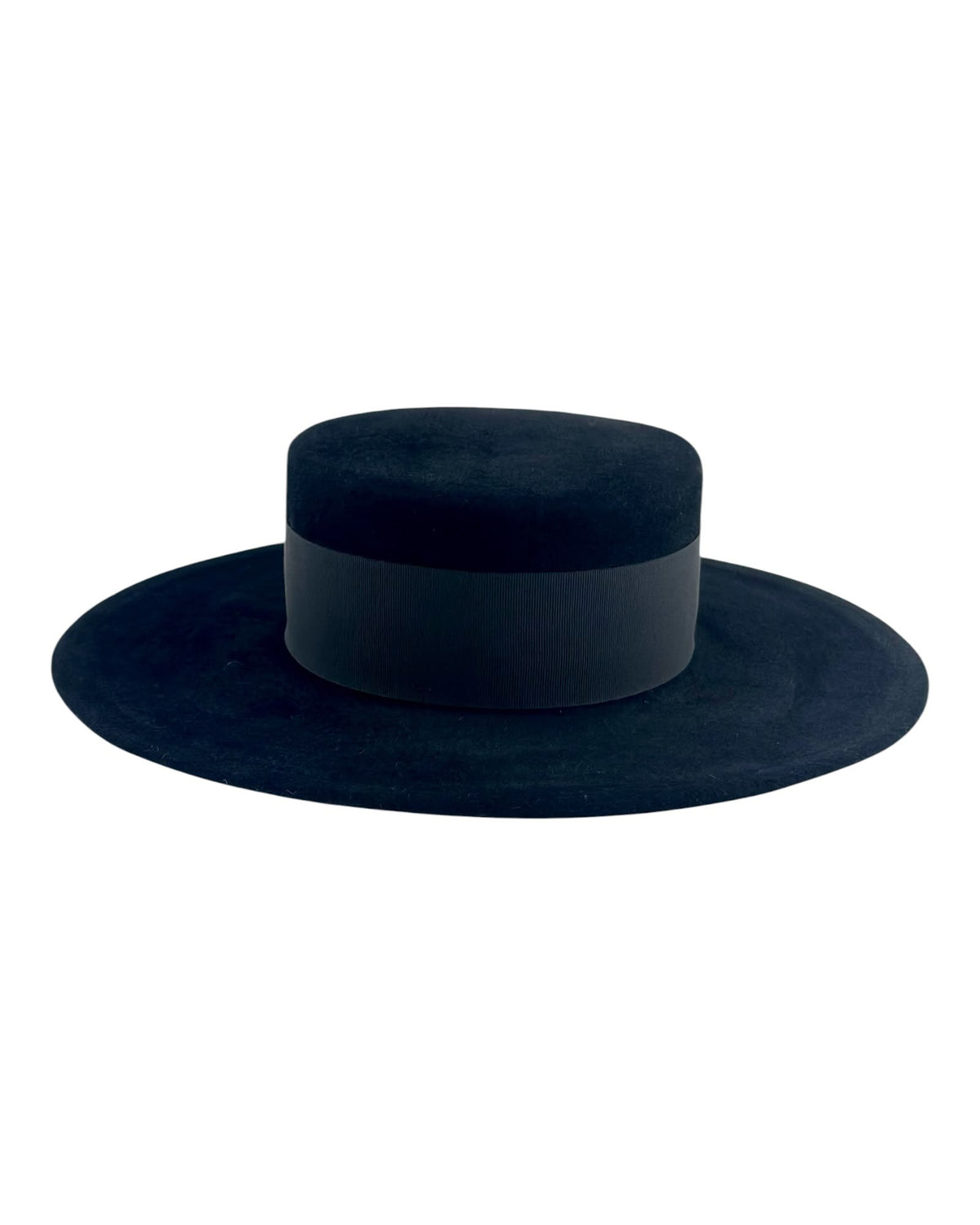
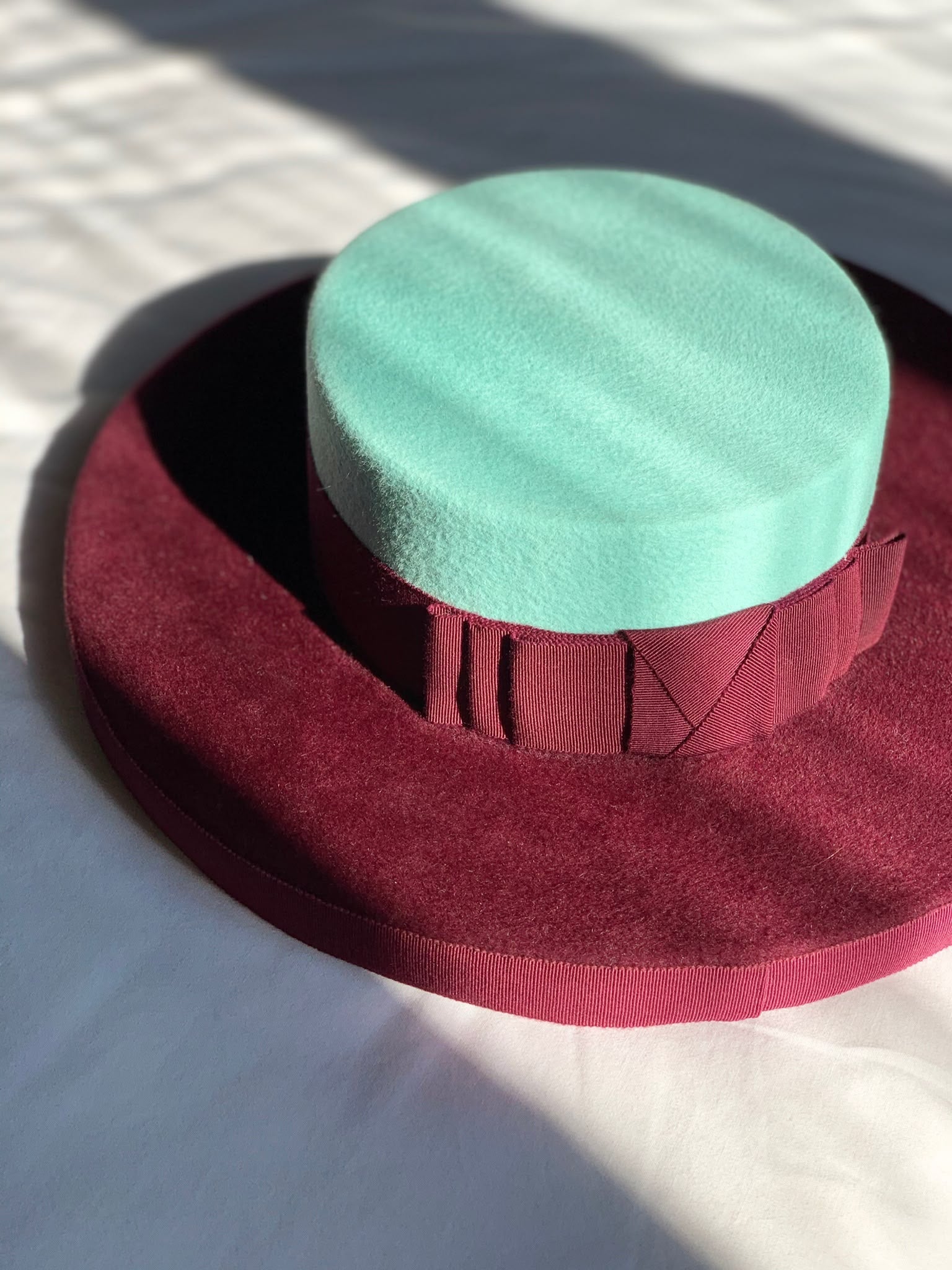
A felt or straw hat lasts for decades when you handle it by the brim with both hands, store it away from heat and damp between wears and let it dry naturally whenever it gets wet. Brush felt with a soft brush, wipe straw with a barely damp cloth and keep every piece out of direct sunlight. When the crown or brim loses its shape, a milliner can steam and reblock it back to life.
How to handle your hat
Always lift a hat with both hands under the brim and let the crown rest in your palm. Lifting by the pinch at the top of the crown is the quickest way to stretch felt out of shape and crack the tip on a straw. When you take it off, hold the brim at the sides where your fingers do least harm to the trim. Set it down upside down so it balances on the crown and the brim floats clear of the surface, which protects any curl or wave the milliner has shaped into the edge.
Handle flowers, feathers and veiling as little as you can. These are the most delicate parts of a piece and they hold their bloom longest when they are left undisturbed.
How to store a felt or straw hat
Everyday storage between wears
Between wears, give your hat a home away from radiators, sunny windowsills and steamy bathrooms. Heat dries out the natural oils in fur felt and makes straw brittle, while damp invites mould and mildew. A shelf in a cool wardrobe suits most pieces. Rest wide brims upside down and stand structured crowns on a hat stand or a rolled towel so nothing presses on the shape.
Long-term and seasonal storage
For the months when a hat is off duty, an acid-free hat box is the surest protection. Stuff the crown gently with acid-free tissue to hold its form and lay a sheet over any flowers or feathers so they keep their shape. Keep the box off the floor and away from outside walls where condensation gathers. Avoid plastic bags and airtight containers, because fur felt and straw both need to breathe. Our full care guide walks through the tissue and boxing method step by step.
What to do when your hat gets caught in the rain
Felt in the rain
Fur felt copes with a light shower far better than most people expect, since it began life as a water-shedding animal coat. If you are caught out, shake off the surface water and blot the hat with a soft cloth. Let it dry at room temperature away from any heat source, then brush the pile back into direction once it is completely dry. Never dry felt on a radiator or with a hairdryer, as forced heat shrinks the fibres and warps the crown.
Straw in the rain
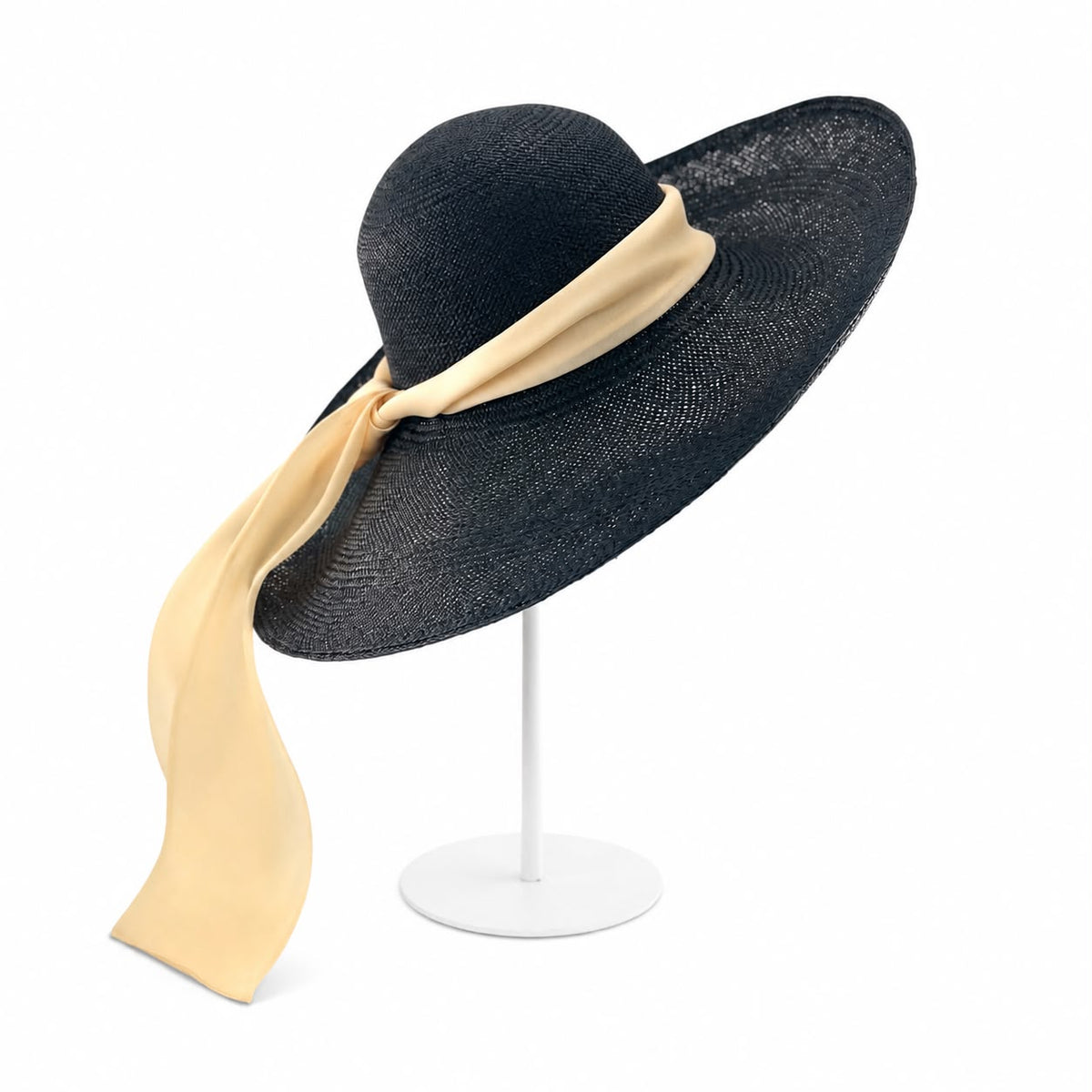
Straw is thirstier and less forgiving. A few spots of rain will dry out cleanly, yet a soaking can relax the weave and drop the brim. Blot away the moisture, reshape the brim gently with your hands and let the hat dry slowly on a stand. If a straw hat loses its crispness after a wetting, a milliner can restore it with steam and sizing. Summer pieces earn the most rain exposure, so it helps to know your straw before the season starts. You can see how ours are made and finished across our summer hats.
How to clean felt and straw
Cleaning felt
Regular brushing keeps felt looking cared for. Use a soft hat brush or a lint-free cloth and sweep anticlockwise around the crown following the nap. Lift light marks with a gum eraser or a piece of fresh bread rolled into a soft ball, working with a light touch. For grease or a stubborn stain, hold off on home remedies and speak to your milliner, because solvents and water can leave rings that are harder to remove than the original mark.
Cleaning straw
Straw responds to a wipe with a barely damp cloth followed by a dry one. Work along the weave and dry the hat straight away so no water sits in the fibres. Freshen a pale straw with a soft brush to lift dust from the plait. Keep makeup, hairspray and suncream off the inner brim, and a grosgrain sweatband will take the wear that would otherwise mark the straw.
When to reblock and reshape
Every hat softens with the years, and this is where couture construction shows its worth. Because each Maria Monica London piece is hand-blocked over a wooden block in our London atelier, the same shape can be steamed and blocked again when the crown flattens or the brim tires. Reblocking takes the piece back to its felt or straw body, cleans and reshapes it over the block, then re-trims and re-finishes it. A hat you wore to a wedding twenty years ago can return looking freshly made.
Philip Treacy, in whose London atelier our founder spent five years, described the object simply.
A hat is a flag, a shield, a bit of magic.
Care for the felt and the straw and that magic keeps for a lifetime. When a treasured piece needs attention, our private service handles cleaning, reshaping and reblocking by hand.
Questions people ask
Can you wear a felt hat in the rain?
Yes. Fur felt handles a light shower well. Shake off the water, blot it dry and let it dry away from heat, then brush the pile back into direction. Avoid heavy downpours and never dry felt on a radiator.
How do you store a hat so it keeps its shape?
Rest wide brims upside down or on a padded stand, fill the crown with acid-free tissue and keep the hat in an acid-free box away from heat, damp and sunlight. Skip plastic bags, since felt and straw need to breathe.
How often should a hat be reblocked?
Only when it needs it. A well-stored hat can go many years between reblocks. Book one when the crown flattens, the brim droops or the shape no longer sits as it should.
How do you clean a straw hat at home?
Wipe it with a barely damp cloth along the weave, dry it at once and brush away dust. Keep hairspray and suncream off the brim and leave any stain to your milliner.
Does storing a hat upside down damage it?
For most wide-brim hats, resting on the crown protects the brim curl. If the crown tip is delicate or highly domed, use a hat stand so nothing presses on either the crown or the brim.
A hat made by hand deserves care by hand. If you would like your felt or straw piece cleaned, reshaped or reblocked, or you are ready to commission something new to keep for decades, tell us what you have in mind.
Shop the pieces
Every piece is designed and made by hand in the London atelier.