How long a good hat lasts, and what makes one worth keeping
How long does a good hat last? Indefinitely, in the sense that matters. A hand-blocked felt or straw hat has a structure that can be rebuilt, so it can be re-blocked into a different shape, retrimmed and recoloured decades after it was made. Milliners routinely rework hats from the fifties. What ends a hat is not age, it is damp, crushing and moth, and all three are avoidable.
The question worth asking is not how long it survives, but whether it can be remade. That is what separates a hat you keep from a hat you replace.
Why a blocked hat can be rebuilt
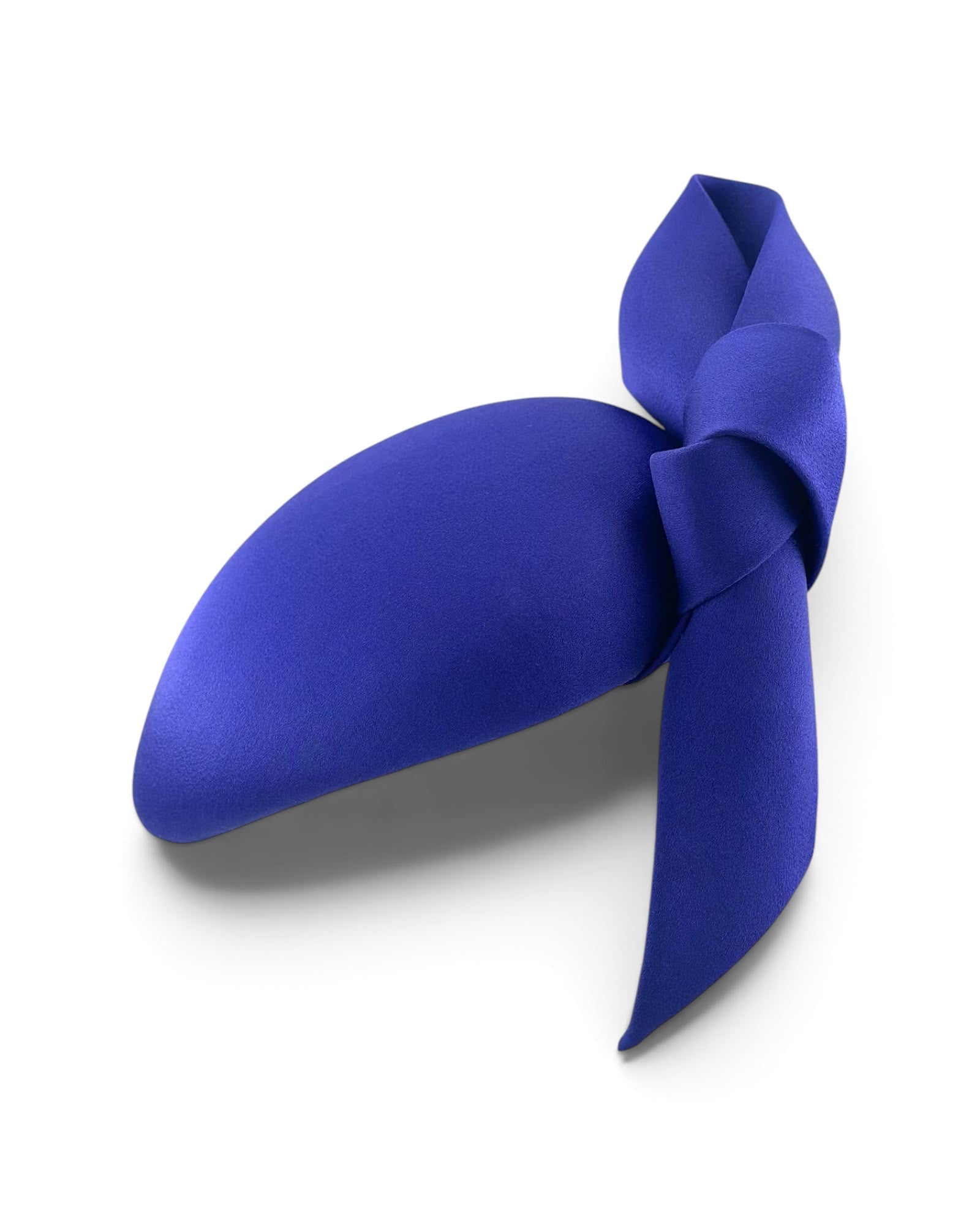
The shape in a hand-blocked hat is held by the fibre itself, set by steam over a wooden block, and reinforced with wire worked in by hand. Steam is reversible. A milliner can soften the felt or straw, pull it over a different block, and set a new shape into the same material.
A machine-pressed hat is formed under heat and pressure into a shape the fibre does not really hold on its own, often with stiffener doing the work. It cannot be meaningfully reshaped. When it goes out of shape, that is the end of it.
This is why the second-hand market in couture millinery exists and the one in factory hats does not.
What can be done to an old hat
Re-blocking. The most dramatic. A wide brim becomes a smaller brim, a tall crown becomes a shallow one. The hat you wore to a wedding in 2010 becomes a different hat entirely.
Retrimming. Far more common and much cheaper. The base stays and the bow, veiling or flowers are replaced. Trim dates faster than shape, so this alone can move a hat forward twenty years.
Recolouring. Felt takes dye well, straw less predictably. A pale hat can usually go darker. Going lighter is not possible.
Repairs. Brim wire can be replaced, edges rebound, linings and petersham renewed. None of it is exotic.
What actually destroys a hat
Damp. The main killer. Felt absorbs moisture, loses its shape and grows mould. A wet hat should be dried at room temperature away from heat, on its crown or on a form, never on a radiator.
Crushing. Storing a hat under other things flattens the crown, and a crown crushed for years can set that way.
Moth. They eat fur felt and wool. This is why a stored hat needs a sealed box rather than an open shelf.
Direct sun. Fades colour unevenly, and uneven fading cannot be corrected.
Hairspray on the inside band. Builds up, discolours the petersham and eventually smells. Wipe the band occasionally.
How to store one properly
Fill the crown loosely with acid-free tissue so it holds its shape. Put the hat in a rigid box, crown up, with tissue around the brim so nothing presses on it. Keep the box somewhere dry and dark, at normal room temperature. Not a loft, which swings between damp and hot. Not a cellar.
For a wide brim, store it upside down resting on the crown if the box is not deep enough to support the brim, because a brim carrying its own weight for years will drop.
Is buying one hat properly better than three cheaply?
Financially, over a long enough period, yes, and it is not close. A £700 hat worn to fifteen occasions across twenty years, retrimmed twice along the way, costs less per wearing than three £200 hats that lose their shape. It is also three hats' worth of material that was never made.
If you will genuinely wear a hat once, this argument does not apply and hiring is the honest answer.
What we do with older pieces
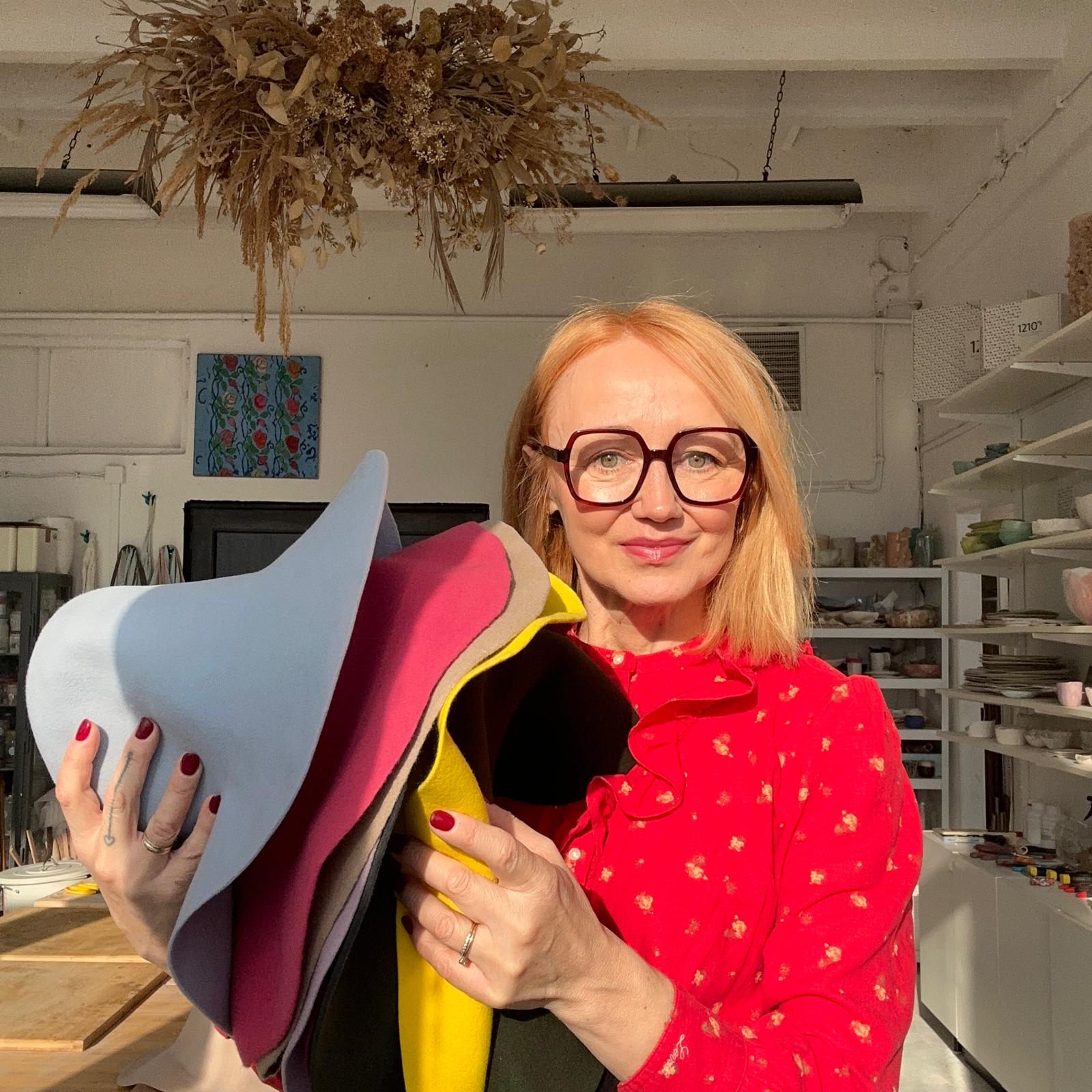
Maria Monica London takes back pieces made in the atelier for re-blocking, retrimming and repair, and will look at hats by other makers too. Every piece is built with reworking in mind, which is part of why the structure is wired by hand rather than glued.
If you have a hat you loved and stopped wearing, send a photograph of it before you decide it is finished. The shape is usually the part worth keeping, and the shape is the part that survives.