What makes a hat couture rather than mass produced
What makes a hat couture? Five things, and they are all about process rather than price. The shape is blocked by hand over a wooden form instead of pressed by machine. The structure is wired by hand so it holds its line. The edges are finished by hand. The colour is matched to you rather than picked from a stock range. And one person is responsible for the whole piece from start to finish. A hat can be expensive without any of these. It cannot be couture without them.
Here is what each one actually means when you are holding the hat.
Blocking, which is where the shape comes from
A couture hat starts life as a flat cone of straw or a bell-shaped felt hood. It is softened with steam, pulled down over a carved wooden block, pinned around the edge and left to dry into that shape. The block gives the crown its geometry. Nothing else in the process can create that.
A factory hat is pressed between two heated metal dies in seconds. The result is consistent and it is fine, and it is also why factory hats within a category all look faintly like each other. Blocks are carved individually, so a milliner's collection of blocks is part of the house's signature.
What to look for. Turn the hat over. A blocked crown has a smooth, even interior with no seam and no moulding line.
Wiring, which is why it holds
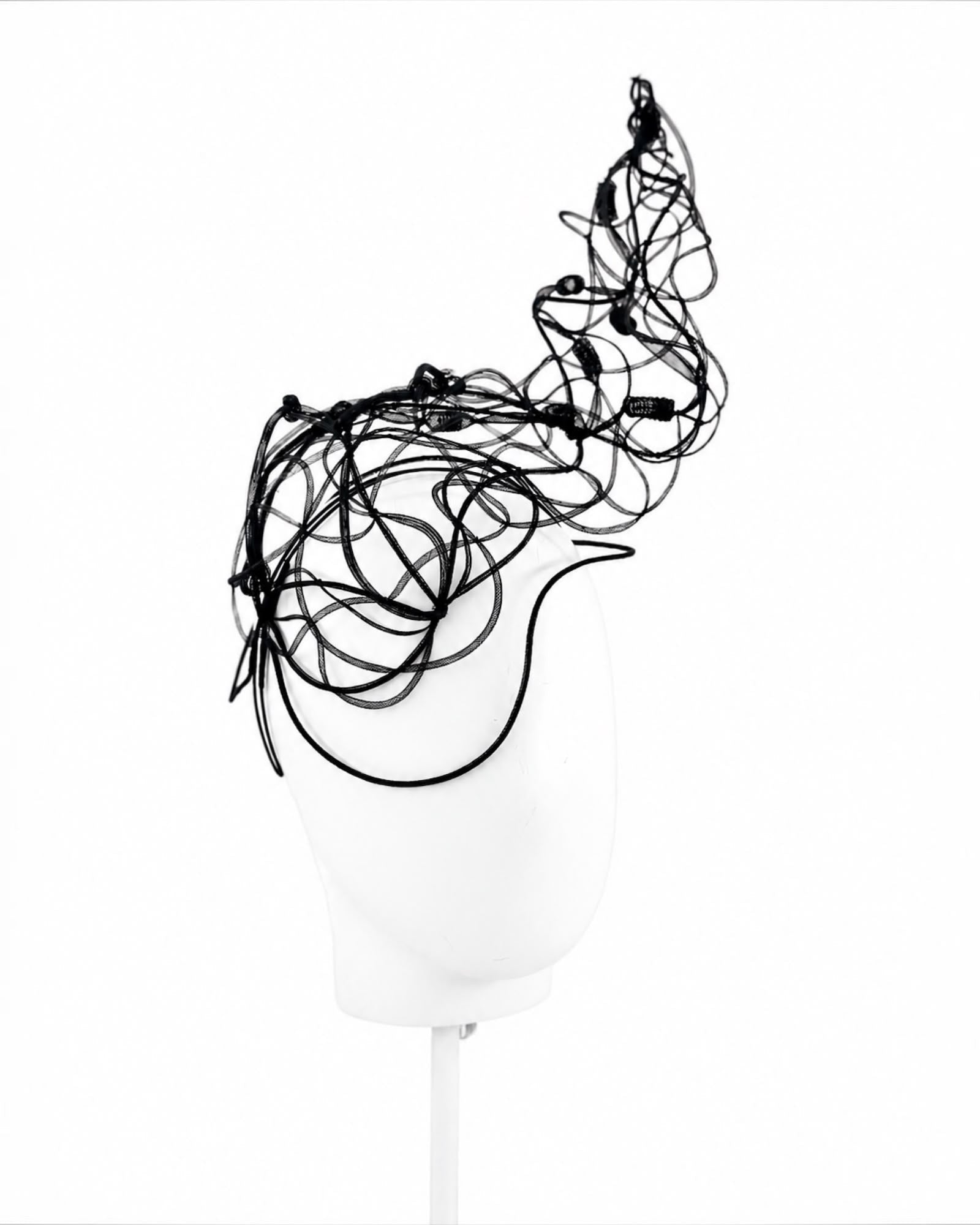
Brims and sculptural elements have millinery wire worked in by hand around the edge, then covered. The wire is what stops a wide brim drooping by three in the afternoon and what lets a crinoline sweep stay in the air.
Getting it right is judgement. Too little and the shape collapses, too much and the hat looks stiff and feels heavy. It is done by feel, which is why it is a skill rather than a specification.
What to look for. Press the brim edge gently between finger and thumb. You should feel a firm continuous line, and the brim should return to its shape when you let go.
Hand edging and finishing
The edge of a brim is bound, rolled or bias-faced by hand, and the inside carries a petersham ribbon stitched in by hand to sit against the head. Linings are set by hand. None of this is visible in a photograph, and all of it is what you feel when you put the hat on.
What to look for. Look inside. Hand stitching is small, even and slightly irregular in a way machine stitching never is.
Colour matched to you
A factory produces a season's colours and you choose from them. A couture milliner dyes or sources to match a cutting of your own fabric, judged in daylight, because a green that matches indoors can be visibly wrong outside at eleven in the morning.
This is the thing clients mention most afterwards, and it is invisible in a product photograph, which is why it is undersold.
One person, start to finish
In a couture workroom the person who designed the hat blocks it, wires it, trims it and fits it. There is no handover, so a decision made at the fitting can be executed the same afternoon.
This is the difference that survives everything else. It is also the reason a couture house makes far fewer hats a year than people expect.
The test that matters in ten years
A hat built this way is not finished when it leaves. Felt and straw can be re-blocked into another shape, retrimmed and recoloured. A couture piece from fifteen years ago can be brought back and made into something you would wear now, for a fraction of what it originally cost.
A pressed factory hat cannot be reworked, because there is no structure to rebuild. That is the clearest practical answer to whether the difference is real.
What this means at Maria Monica London
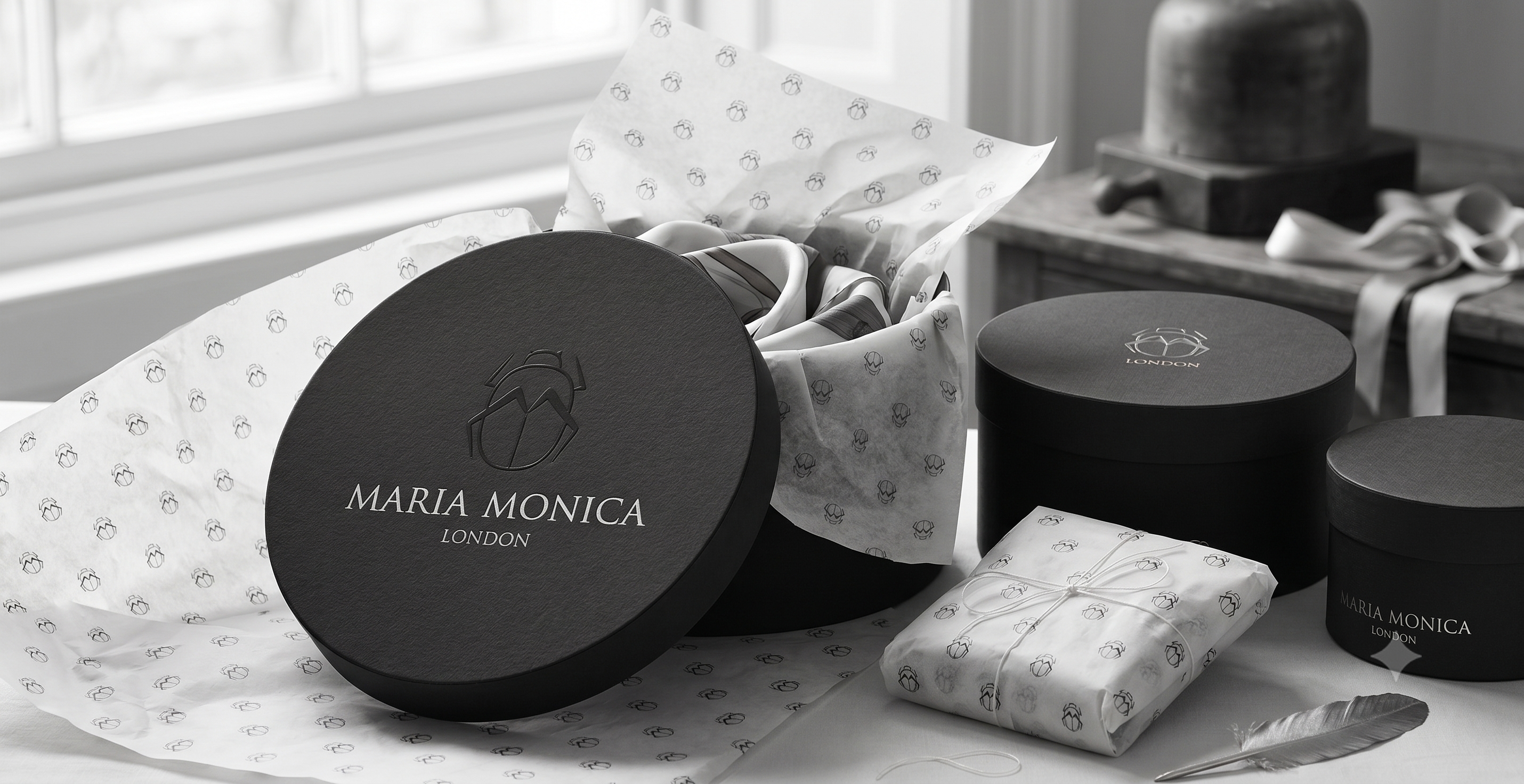
Every piece is blocked over wooden blocks in the London atelier, wired and edged by hand, and made by Monika from start to finish. Each is one of a kind. Anything can be remade in another colour, blocked to your own head measurement, and brought back years later to be reshaped rather than replaced.
If you are looking at a hat somewhere else and want to know which kind it is, the four checks above will tell you in about thirty seconds.