Hat designers in London: who makes what, and how to choose
Who is the best hat designer in London? Nobody can answer that honestly, because London millinery is not one field. It is at least four. There are internationally known names whose work is closer to sculpture than dress, there are royal-warrant traditionalists, there are contemporary independents building their own houses, and there are quiet bespoke makers who take a handful of clients a year and are almost impossible to find online. Each is the right answer to a different question. This guide explains which is which, so you can pick the one that fits what you actually need.
A disclosure first, because it matters when you read the rest. This is written by Maria Monica London, a London millinery house. Monika Perlińska, who makes every piece here, spent around five years as a milliner in Philip Treacy's atelier and around seven as head milliner at Jane Taylor. Both are named below. We have tried to describe the field as we would describe it to a friend, and you should still read a competitor's guide with your eyes open.
The four kinds of London hat designer
The internationally known name
Philip Treacy and Stephen Jones are the two London milliners most people outside millinery can name. Treacy's work is sculptural and architectural, built on hats that behave like objects, and it has been carried on the world's most photographed heads for three decades. Jones has a long history of hat design for fashion houses alongside his own collections, and his name sits inside the wider story of British fashion rather than only millinery.
Choose this kind of maker when the hat is the event. You are buying design authorship and a name, and the piece will read as that maker's work before it reads as yours. Expect the price and the waiting list to reflect that.
The royal-warrant traditionalist
Rachel Trevor-Morgan was granted a Royal Warrant as milliner to Queen Elizabeth II, which is about as clear a signal of a particular kind of skill as this trade offers. Makers in this group work in a formal register: proportion, correctness and a hat that behaves impeccably through a long ceremonial day.
Choose this kind of maker for a state occasion, a formal wedding where you are in the family, or any day where the hat needs to be beyond question rather than interesting.
The contemporary independent house
This is the largest and most varied group, and it is where most good commissions happen. These are milliners running their own small houses, usually making by hand in London, often the only pair of hands on the piece. Jane Taylor, whose pieces have been worn by the Princess of Wales, sits at the established end. Emily London and Maria Monica London work in this group too, alongside a number of other independent houses across the city.
The distinguishing feature is access. You can usually speak to the person who will make the hat, be fitted by them, and have a shape changed because of the way your face is built. Choose this group when you want a piece made for you rather than selected by you.
Where Maria Monica London sits
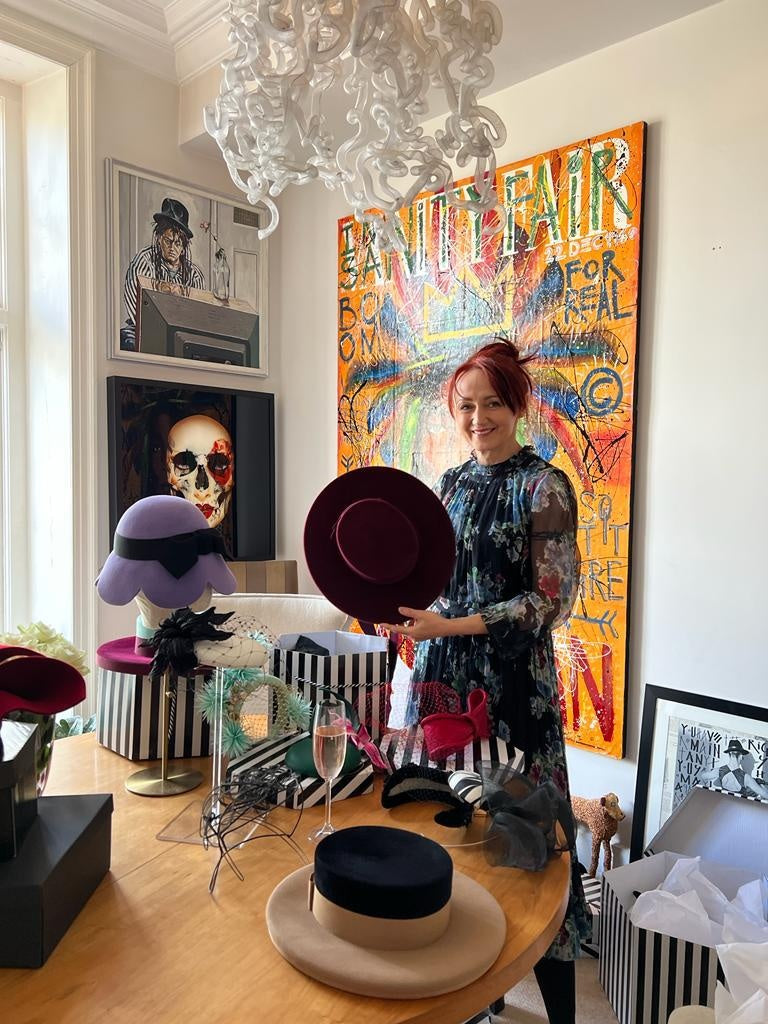
Since this is our guide, here is the same description we have given of everyone else. Monika Perlińska has been at the bench for around thirty-five years. Five of those were spent as a milliner in Philip Treacy's atelier and seven as head milliner at Jane Taylor, which means hats she made by hand have already been worn at the events this guide is about, under other people's labels.
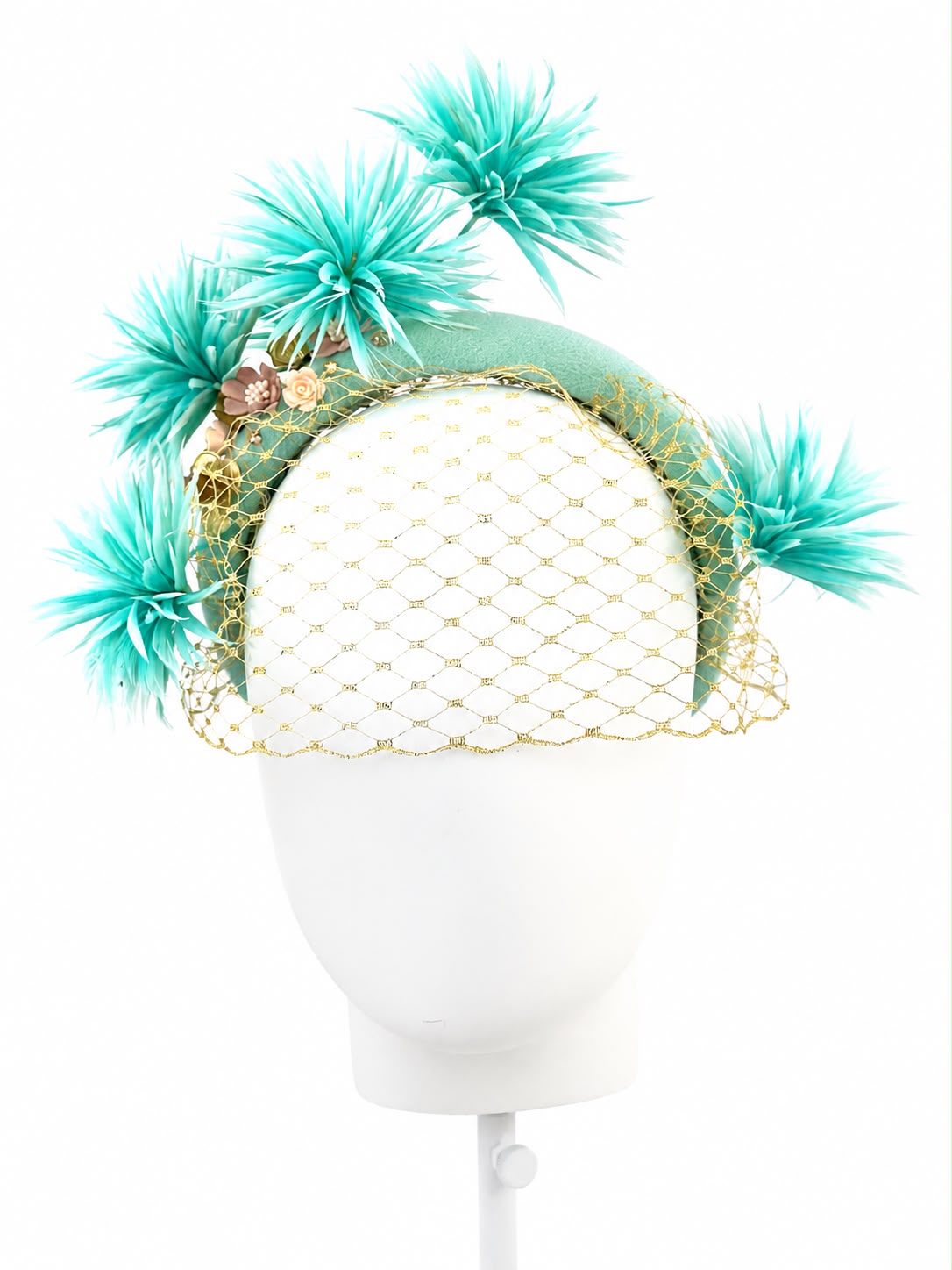
The house style is sculptural and restrained. Blocked and hand-shaped form rather than applied decoration, crinoline, parasisal straw and felt worked into architectural shapes, and colour matched by hand against a cutting of your own fabric rather than chosen from a chart. Every piece is one of a kind and made by one pair of hands, so what is on the site is what exists at that moment, and anything can be remade in another colour and blocked to your own head measurement.
The practical difference is that the person who designs the hat is the person who blocks it, wires it, finishes it and fits it on your head. For some clients that matters more than a name on a label. For others it does not, and the earlier sections of this guide are for them.
The quiet bespoke maker
There are milliners in London working almost entirely by word of mouth, with a small website or none, taking a limited number of private clients. They are hard to find deliberately. If a friend with very good hats will not tell you where they came from, this is usually why.
Choose this route if you already have the introduction. There is no reliable way to search for it.
What actually separates one hat designer from another
Names aside, four things genuinely differ between makers, and they are worth asking about directly.
Who makes it. In some ateliers the designer designs and a team makes. In others one person blocks, wires and finishes every piece. Neither is wrong. They are different products, and only one of them can be adjusted mid-fitting by the person holding the hat.
Whether it is blocked to your head. A hat blocked to your own measurement sits differently from one made to a standard size and padded to fit. It is the single biggest difference in how a hat feels after four hours.
Whether colour is matched by hand. Matching to a cutting of your outfit fabric, in daylight, is a craft skill and a slow one. Ask whether they match to a swatch, a photograph, or a chart. The answers are not equivalent.
What happens afterwards. A hat made by hand can be reblocked, retrimmed and recoloured for years. Ask whether the maker will still take it back in a decade. Some will. That answer tells you what you are buying.
What does a hat from a London designer cost?
These are broad guides rather than quotations, and every maker prices differently. For a made to order or bespoke piece from an independent London house, expect roughly £400 to £900 for a headpiece, cocktail hat or small brim, and £700 to £1,500 and upward for a large brim or a heavily worked couture piece. The internationally known names sit above this, sometimes well above.
If a "handmade London hat" is offered at under £150, ask where it was blocked and by whom. Hand finishing a bought-in body is a real skill and a legitimate product, and it is a different thing from a hat blocked from a raw straw cone or felt hood in a London workroom.
How long does a commission take?
One to four weeks is normal for an independent house, depending on the piece and the season. The established names and the warrant holders often need considerably longer, and everyone in London is busiest between March and June because of the wedding and racing season. If your event is in June, start in March.
How to choose, in one paragraph
Decide first whether you want a name or a fit. If the hat is the statement and the maker's signature is part of the point, go to the internationally known houses and accept the wait. If the occasion is formal and correctness matters more than invention, go to a warrant-level traditionalist. If you want something made for your face, your colour and your outfit, by the person who will actually make it, go to an independent house and ask the four questions above. And if you have the introduction to a quiet bespoke maker, use it.
A note on this guide
Every maker named here is a real, working London milliner and we have kept the claims to what is publicly documented. We have not ranked them and we will not, because the ranking depends entirely on what you need. If you are choosing between us and someone else on this page and you want a straight opinion about which suits your occasion, write to us and you will get one.
Questions people ask about London hat makers
What is a female hat maker called?
A milliner. The word applies regardless of gender and covers anyone who designs and makes hats by hand. A hatter traditionally made men's hats and a milliner made women's, though the distinction has largely gone. Millinery is the trade itself.
Who is the most famous hat designer?
Philip Treacy is the most widely known British milliner, followed by Stephen Jones. Fame in millinery tends to follow the label rather than the hand that makes the hat.
For a piece made start to finish by one person, London's independent houses are where to look. Monika Perlińska draws, blocks and finishes every Maria Monica London piece herself, with around thirty-five years at the craft and every commission made to the wearer's head.
What is the oldest hat store in London?
Lock & Co. Hatters at 6 St James's Street, established in 1676. By its own account it is the oldest hat shop in London and the oldest in the world. It is a retail hatter rather than a couture millinery house, which is a different trade.
Who are the hat makers in London?
London holds four kinds. Retail hatters such as Lock & Co. Couture milliners including Philip Treacy, Stephen Jones and Rachel Trevor-Morgan. Independent millinery houses such as Jane Taylor, Emily London and Maria Monica London. And makers who design but send the work out. The difference that matters is whether the person who draws the hat also blocks it.
What makes a hat expensive?
Hours and materials. A couture hat is blocked over a wooden form, wired, edged and finished by hand, which takes days rather than minutes. Parasisal straw, silk and hand-dyed crin cost more than machine-made felt. A handmade occasion hat in London generally runs from around £400 to well over £1,000.
Where can I commission a bespoke hat in London?
At a millinery house that blocks its own work. A bespoke commission starts with a conversation about the occasion and the outfit, then a drawing, a head measurement and a colour matched against a cutting of your fabric. Maria Monica London takes commissions from a private studio in West or Central London, and by video call for clients abroad. Expect one to four weeks from the drawing being agreed.
Who makes hats by hand in London?
Fewer houses than the shop fronts suggest. Many labels design in London and have the making done elsewhere. A hand house blocks straw or felt over a wooden form on the premises, wires and edges it, and finishes it by needle. Monika Perlińska does all of it herself at Maria Monica London, which is why every shape can be made in any colour you choose.